
Best overall for a hosted corporate dinner: plated service. Best for menu choice: a buffet. Best for networking: passed bites with food stations. For a Fort Worth corporate event in 2026, choose the catering style that supports your agenda, then personalize the menu around your guests.
- For best corporate event catering Fort Worth planning, choose plated service for a seated client dinner.
- Choose a buffet for menu choice, food stations for informal interaction, and boxed meals for individual distribution.
- Gabbeys corporate event catering emphasizes personalized menus and attentive service for your gathering.
- Request a personalized quote covering food, staffing, equipment, setup, and cleanup responsibilities.
Why the catering style matters
Your catering format determines whether guests stay seated, move through a line, or circulate while eating. That affects conversation, presentation timing, and how comfortably people use the room.
Start with the experience you want, not a list of dishes. A client appreciation dinner needs a different rhythm from an employee workshop, even when both take place in the same Fort Worth venue.
Gabbeys is best for corporate hosts who value personalized menus and attentive service. Explore Gabbeys when those priorities match your event, and ask which service format fits your location and plans.
What makes the best corporate event catering format?
Use these criteria to choose a format for your 2026 event before comparing menus:
- Agenda fit: Decide whether food supports a seated program, a working session, or open conversation.
- Guest movement: Check whether guests can leave their seats without interrupting speakers or blocking circulation.
- Menu flexibility: Establish how dietary requests will be collected, identified, and served.
- Venue readiness: Confirm preparation space, service access, power needs, and venue restrictions.
- Service scope: Clarify who handles setup, replenishment, clearing, and cleanup.
- Quote clarity: Compare the same responsibilities across proposals rather than food descriptions alone.
No format wins every criterion. Plated service supports a shared dining sequence; individual meals simplify distribution. Choose the trade-off that serves your event rather than asking one format to do everything.
Corporate catering styles at a glance
| Rank and style | Best for | Standout feature | Key limitation |
|---|---|---|---|
| 1. Plated service | Hosted client dinners and recognition meals | Courses arrive at seated places | Requires coordinated seating and service |
| 2. Buffet service | Team celebrations with varied preferences | Guests select from a shared menu | Lines and replenishment need planning |
| 3. Food stations | Informal events organized around movement | Separate serving points distribute food around the room | Needs suitable floor space and service planning |
| 4. Passed bites with substantial food | Networking receptions | Food can reach guests during conversation | A reception menu needs a clear meal-or-snack purpose |
| 5. Individually packed meals | Working lunches and training sessions | Each guest receives a separate meal | Creates packaging and distribution tasks |
These are service formats, not confirmed package inclusions. Ask your caterer to specify the proposed format and responsibilities in writing.
1. Plated service: best catering style for client dinners
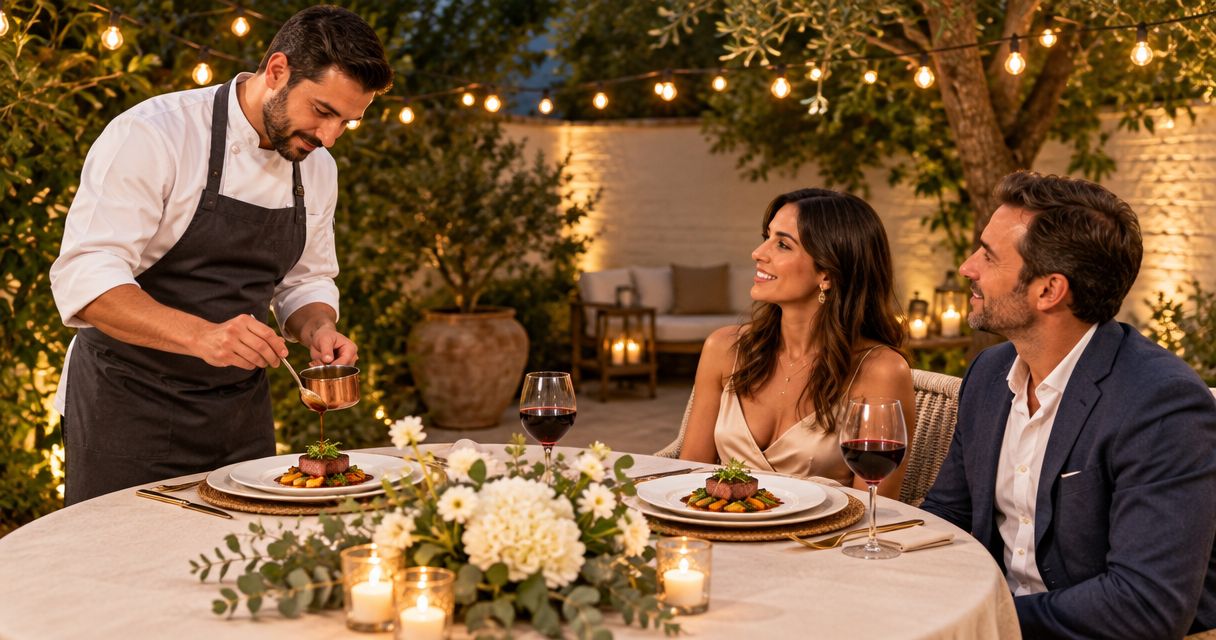
Plated service brings prepared courses to seated guests. It suits an event where the meal, conversation, and formal program belong together, such as a client dinner or employee recognition evening.
Choose this format when you want guests to remain at their tables. For a more intimate gathering, use the same planning principles as a private dinner: a considered menu, comfortable pacing, and attentive service.
Plated service pros:
- Keeps guests seated during the dining sequence.
- Supports a defined order of courses.
- Gives the host a clear structure for remarks between courses.
Plated service cons:
- Dietary selections need an identification and delivery plan.
- Late arrivals and changing seat assignments complicate service coordination.
- Food service must be scheduled around speeches, not treated as silent background activity.
Best for: Hosted client dinners, leadership gatherings, and seated recognition events.
Before confirming, ask how the service team will identify special meals and communicate with the event lead. Our guide to corporate event catering for client dinners in Dallas–Fort Worth covers the planning context for this format.
Verdict: Choose plated service when a shared, seated dining experience is the priority.
2. Buffet service: best catering style for menu choice
Buffet service presents food at a shared serving area, where guests select their meal. It gives attendees visible choices without requiring every guest to select an entrée before the event.
For a Fort Worth team celebration in 2026, a buffet fits an agenda with a defined meal break and room for circulation. Its success depends on the serving layout as much as the menu.
Buffet service pros:
- Lets guests select among the dishes presented.
- Accommodates different portion preferences.
- Separates the dining area from the main serving point.
Buffet service cons:
- Guests leave their seats and form lines.
- Shared serving areas require replenishment and clearing.
- Menu labels alone do not resolve allergen cross-contact concerns.
Best for: Employee celebrations and team meals where choice matters more than synchronized courses.
Ask where the line begins, where guests collect tableware, and how they return to their seats. Keep the serving route away from entrances and presentation equipment. Confirm whether attendants are included rather than assuming buffet service means no service staff.
Verdict: Choose a buffet when guests need choice and the room supports orderly movement.
3. Food stations: best catering style for informal interaction
Food stations divide service among separate points rather than one continuous buffet. Each station can represent a different part of the proposed menu, subject to the caterer’s confirmed offering.
Use stations when movement is part of the event. They suit an informal company celebration where guests are encouraged to circulate rather than remain with their original table group.
Food station pros:
- Creates distinct places for guests to gather.
- Allows food service to be distributed around the room.
- Gives the host flexibility in arranging dining and conversation areas.
Food station cons:
- Requires room for both service points and guest circulation.
- Equipment and staffing requirements differ by station.
- Uneven demand still creates queues at popular serving points.
Best for: Informal corporate celebrations with an open agenda and suitable floor space.
Ask your venue and caterer to review the layout together. A station should not obstruct an exit, compete with a registration desk, or force guests to cross the speaker’s presentation area. Confirm whether each station is staffed and how replenishment will work.
Verdict: Choose stations when movement supports the event, not simply because the format looks appealing.
4. Passed bites: best catering style for networking receptions
Passed service brings small food portions to guests as they mingle. Pairing passed bites with clearly planned substantial food gives you a reception format built around conversation rather than assigned seating.
Set expectations in the invitation. Guests need to know whether the event provides a meal or refreshments, especially when it overlaps their usual dinner time.
Passed service pros:
- Brings food into the conversation area.
- Does not require every guest to visit a central serving line.
- Supports a reception without a fixed course sequence.
Passed service cons:
- Standing guests need food they can manage comfortably.
- Hosts need a plan for guests who prefer or require seating.
- A vague reception menu leaves the meal expectation unresolved.
Best for: Client mixers, opening receptions, and company networking events.
Discuss plate size, utensil needs, and clearing with the caterer. A beautifully presented bite still needs to be practical when a guest is holding a drink or greeting a colleague. Provide an accessible way for guests to receive food without having to circulate.
Verdict: Choose passed service for conversation-led events, with a clear plan for seating and sufficient food.
5. Individually packed meals: best catering style for working lunches
Individually packed meals give each attendee a separate meal to collect or receive. This format suits a working session where a shared serving area would interrupt the schedule.
The planning focus shifts from table service to labeling, distribution, and collection. Confirm dietary assignments before meals reach the room, rather than asking attendees to open packages to identify them.
Individually packed meal pros:
- Supports individual distribution at a planned break.
- Gives each attendee a clearly assigned meal.
- Avoids a shared serving line when meals are distributed to places.
Individually packed meal cons:
- Creates packaging that needs collection and disposal.
- Requires accurate labeling and a distribution plan.
- Provides less of a hosted dining experience than table service.
Best for: Training sessions, workshops, and agenda-led working lunches.
For a 2026 conference, distinguish meal delivery from ongoing hospitality. Ask who distributes meals, handles late arrivals, and clears the room before the next session. For a longer agenda, consult the guide to corporate event catering for an all-day conference.
Verdict: Choose individual meals when the working session matters more than a formal dining experience.
How these catering styles are ranked
Plated service leads this guide because it gives a hosted corporate dinner a defined dining structure. The remaining formats each serve a different purpose: choice, movement, networking, or individual distribution.
The ranking follows agenda fit, guest movement, dietary planning, venue readiness, and service scope. It is a planning comparison, not a claim that one format is universally better or that every caterer offers every option.
Build the service plan before approving the menu
A good menu needs a workable schedule. Use these steps to turn your preferred format into a clear event brief.
Define the meal window
For a planning example, a 60-minute lunch break with 20 minutes reserved for remarks leaves 40 minutes for meal service and eating. Those are agenda allocations, not a promise that any format will serve your group within that time.
Give the caterer the full window, including room access and clearing. Ask whether the proposed service fits it.
Gather dietary needs
Collect dietary requests before finalizing the menu and distinguish preferences from allergies. Ask how meals will be identified and what cross-contact precautions the caterer can confirm.
Do not promise guests an allergen-free meal unless the provider has explicitly confirmed that requirement. Attentive hospitality includes accurate expectations.
Assign responsibilities
Name the event lead and confirm who handles tableware, drinks, setup, clearing, and waste. Identify any responsibilities that sit with the venue rather than the caterer.
For Dallas and Fort Worth events alike, this prevents an attractive proposal from leaving practical gaps on the day.
What affects your personalized catering quote?
Request a quote based on the event you actually intend to host. Guest count, menu selections, staffing, rentals, venue access, travel requirements, and service duration are details to clarify with the provider.
Do not assume a buffet, plated dinner, or reception is the least expensive format by name alone. Compare the complete scope, including setup and cleanup responsibilities, and ask how guest-count changes affect the agreement.
For a qualified Gabbeys corporate event catering inquiry, share your Fort Worth or Dallas venue, event date, guest-count estimate, preferred format, dietary needs, and agenda. Explain whether your priority is a seated client dinner, team celebration, or working meal.
Plan Your Corporate Event Menu
Share your venue, guest count, agenda, and dietary needs to request a personalized catering quote.
Which catering style should you choose?
Choose plated service as the default for a hosted client dinner. Choose a buffet for guest choice, stations for movement, passed service for networking, or individual meals for a working session.
For your 2026 event, let the agenda settle the format before you approve the dishes. Gabbeys offers personalized menus and attentive service; your inquiry should explain what those priorities need to look like for your guests.
FAQ
What's the best corporate event catering style in Fort Worth?
Plated service is the best fit for a hosted corporate dinner where guests remain seated through the meal. Choose a buffet for menu choice, stations for movement, or individual meals for a working lunch.
Is a buffet better than plated catering for a company event?
A buffet is better when guest choice and a flexible meal break are priorities. Plated catering is better when the meal follows a seated program; compare the room layout and service responsibilities before deciding.
What catering format works best for a corporate networking event?
Passed bites with a clear plan for substantial food suit a conversation-led networking event. Tell guests whether you are serving a meal or refreshments, and provide seating for those who need it.
How much does corporate event catering in Fort Worth cost?
Corporate catering requires a personalized quote based on the proposed event and service scope. Ask the provider to address guest count, menu, staffing, rentals, venue requirements, service duration, and any additional charges.
What should I include in a corporate catering inquiry?
Include your date, venue, guest-count estimate, agenda, preferred service style, and dietary requirements. State who handles setup, drinks, tableware, clearing, and cleanup so the proposal can address those responsibilities.
How do I plan corporate catering for guests with allergies?
Collect allergy information before menu approval and ask the caterer to confirm its handling procedures. Agree on meal identification and cross-contact precautions rather than relying on menu labels alone.
Can I ask Gabbeys about a personalized corporate event menu?
Yes. Gabbeys emphasizes personalized menus and attentive service for corporate events. Share your Dallas or Fort Worth event details and request a proposal that confirms the menu, format, and service responsibilities.
One last thing
Walk the guest route before approving the layout: arrival, food service, seating, and departure. A serving point that looks convenient on a floor plan becomes a problem if it blocks the room’s natural circulation.
For your 2026 event, make that walkthrough part of menu approval. The right catering style should help guests enjoy the occasion without having to work out where to go next.