
Yes, a private chef can accommodate food allergies at a dinner party when the chef confirms that the ingredients, kitchen, preparation, and service can meet the guest’s requirements. A personalized menu alone does not establish safety: cross-contact and last-minute substitutions need attention before you confirm the booking.
- Private chef food allergies dinner party planning requires ingredient checks and cross-contact controls, not just menu substitutions.
- Gabbeys offers personalized private chef menus; confirm allergy requirements before booking.
- Choose a shared menu or separate dishes only after reviewing preparation and service arrangements.
- The guest’s allergy instructions should guide the conversation; a chef cannot promise zero risk.
Why this matters
You want your guests to feel welcome, not responsible for inspecting every plate. For a Dallas or Fort Worth dinner in 2026, the most useful first step is a clear conversation about what the chef can accommodate in your actual kitchen.
Gabbeys private chef services are best for hosts seeking personalized menus and attentive service. Those qualities support a thoughtful celebration, but allergy accommodation still needs explicit confirmation. Start your Gabbeys inquiry with the dietary requirements rather than adding them after you choose the menu.
The goal is a dinner your guest can assess confidently. That requires clear boundaries, not reassuring language without supporting details.
Can a private chef accommodate food allergies at a dinner party?
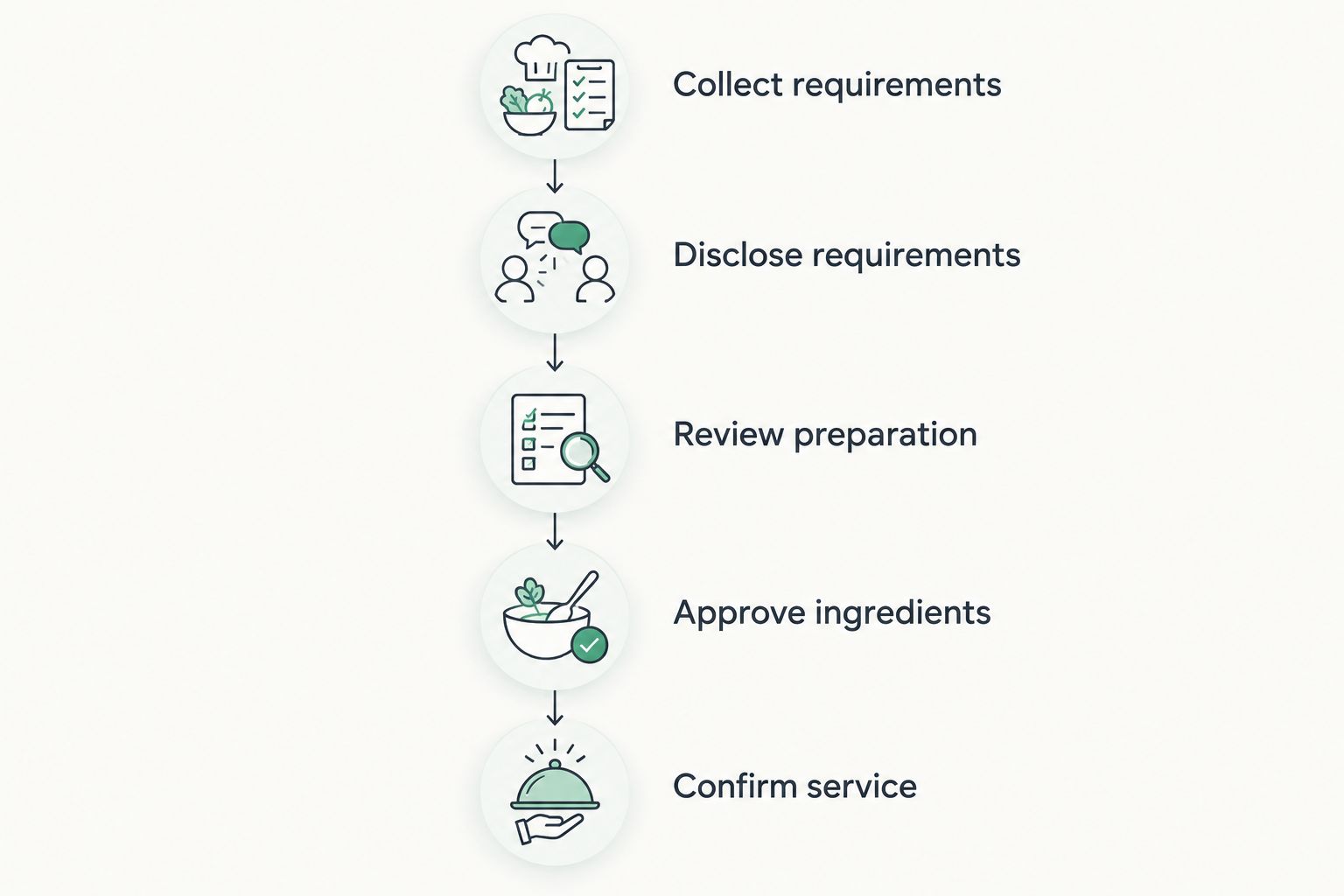
Yes, provided the chef can explain and carry out an agreed preparation and service plan. Use the following sequence before committing to a dinner menu.
- Collect the guest’s requirements. Ask the guest which foods must be avoided and what precautions they need. Do not translate an allergy into a preference or decide that a small amount is acceptable.
- Disclose the requirements before menu design. Send the chef the exact allergens and any additional instructions the guest provides. Include restrictions affecting sauces, garnishes, drinks, and dessert.
- Review the preparation environment. Ask where preparation happens, what equipment is shared, and how ingredients and finished dishes will remain separated where required.
- Approve ingredients and substitutions. Agree on the proposed dishes and how ingredient changes will be handled. An approved recipe does not cover an unreviewed replacement ingredient.
- Confirm the handoff to service. Identify who knows which plate belongs to the guest, who answers ingredient questions, and who communicates changes.
Keep the final instructions in 1 written brief. This is a planning recommendation, not a certification of safety; it helps prevent conflicting messages between the host, chef, and serving team.
A useful answer from a chef describes the process and its limits. If the chef cannot confirm a required precaution, pause the booking and discuss another arrangement with the guest.
Shared menu: best for reducing differences between plates
A shared menu avoids the guest’s specified allergens across the planned dishes. It can make the evening feel more inclusive because everyone enjoys the same meal, without a visibly separate course arriving for one person.
The advantage is simpler communication about the planned menu. The limitation is that removing an allergen from recipes does not remove it from a kitchen, shared equipment, packaged ingredients, or food brought by other guests.
Choose a shared menu when the chef and affected guest agree that the preparation arrangements meet the stated requirements. Expect the menu to be shaped around those requirements rather than treating the restriction as a garnish to remove later.
Separate dishes: best for preserving different menu preferences
Separate dishes allow other guests to enjoy a different menu while the affected guest receives a specifically planned meal. This approach requires a clear system for ingredient handling, preparation, identification, and delivery to the correct person.
The benefit is flexibility. The drawback is that allergens remain part of the broader meal, which creates additional points to address during cooking and service.
| Menu approach | Best for | Main benefit | Main limitation |
|---|---|---|---|
| Shared menu | Hosts comfortable shaping the whole dinner around the restrictions | Fewer differences between guests’ planned dishes | The kitchen and ingredients still need cross-contact review |
| Separate dishes | Groups with different menu preferences | More flexibility across the dinner | Requires careful separation and plate identification |
Neither approach is automatically safe. For your 2026 dinner, choose between these 2 menu approaches only after discussing the guest’s requirements and the chef’s preparation limits.
Why allergy accommodation varies
The same menu request can present different challenges in different homes. A chef needs more than the name of the dish you hope to serve.
- The specific allergen. Ingredient choices and handling questions depend on what the guest must avoid. A broad instruction such as no nuts needs clarification about the exact foods involved.
- Packaged and prepared ingredients. Stocks, sauces, seasonings, dressings, and desserts can contain ingredients that are not apparent from a dish’s name.
- The kitchen and equipment. Shared utensils, preparation surfaces, appliances, and storage all belong in the discussion. Cleaning and separation arrangements need to be specific.
- Preparation locations. Ask whether work happens in your home, elsewhere, or both. The plan needs to cover every location involved.
- Service style. Shared platters and guest-handled utensils introduce different handling questions from individually served plates.
- Changes after approval. A substitute ingredient, additional guest, or outside dessert can change the plan. Decide who must approve changes before the event.
For an at-home dinner, review the kitchen equipment a private chef needs for a dinner party alongside the allergy discussion. Equipment access matters only when it supports the agreed preparation method.
What should you tell the chef about food allergies?
Give the chef specific instructions from the affected guest, not a summary based on what you remember. Ask permission before sharing personal health information, and limit the details to what the planning team needs.
For your 2026 event brief, include:
- The exact foods the guest needs to avoid.
- Whether the guest has additional requirements concerning cross-contact.
- Any ingredient or product information the guest wants reviewed.
- Whether the guest wants to speak directly with the chef.
- The person responsible for communicating menu changes.
- Any food, drinks, or desserts supplied outside the chef’s menu.
Avoid shorthand such as allergy-friendly or clean eating. Neither phrase tells a chef which ingredients to exclude or which handling precautions the guest requires.
The FDA identifies 9 major food allergens in the United States: milk, eggs, fish, crustacean shellfish, tree nuts, peanuts, wheat, soybeans, and sesame. For 2026 planning, treat that list as a labeling reference—not a complete list of foods that can cause an allergic reaction.
A guest’s allergy can involve a food outside that list. Share the actual restriction rather than asking the chef to avoid only the major allergens.
What should you ask before confirming the booking?
Ask questions that produce concrete answers. A confident yes is useful only when you understand what the chef has agreed to do.
Where will the meal be prepared?
Ask which dishes or components are prepared before arrival and which are made in your kitchen. Request an explanation of how the allergy requirements apply at each stage, including transport and storage.
How will ingredient changes be handled?
Ask who checks labels and whether substitutions require renewed approval. A familiar dish name is not a substitute for checking the ingredients actually used.
How will the correct meal reach the guest?
Confirm how the chef and serving team identify the meal without requiring the guest to announce personal medical information across the table. Assign 1 named contact for questions and changes during the evening.
What cannot be accommodated?
Ask the chef to state any limits plainly. A clear limitation gives you and the guest a decision to make; an unsupported assurance does not.
These questions also help you compare proposals. Choose the plan with clear responsibilities rather than the one with the most reassuring adjectives.
Can cooking remove a food allergen?
Cooking is not a reliable way to make a food allergen safe. Food Allergy Research & Education advises that cooking does not eliminate food-allergy cross-contact risk; a dish that has contacted an allergen should not be treated as safe simply because it is heated.
Removing a visible topping also does not resolve exposure that has already occurred. Tell the chef about the allergy before preparation, rather than asking for an ingredient to be picked off at the table.
Your guest’s clinician remains the source for medical advice. The chef’s role is to explain ingredients and food handling, not to decide what exposure the guest should tolerate.
Is a vegan or gluten-free menu enough for food allergies?
A vegan or gluten-free label does not establish that a meal meets every food-allergy requirement. A vegan dish can contain allergens such as peanuts, tree nuts, soy, wheat, or sesame; a gluten-free dish can contain other allergens.
Wheat allergy and celiac disease also require distinct conversations. Tell the chef the actual condition or restriction the guest wants addressed rather than relying on a broad menu category.
For an elegant dinner, begin with the flavors and ingredients that fit the guest’s requirements. Then build the occasion around those choices instead of trying to preserve every element of an unsuitable menu.
How does allergy planning affect the quote?
Ask for a personalized quote based on the agreed scope. Ingredient sourcing, separate preparation, additional service coordination, and the selected menu are subjects to clarify—not automatic charges to assume.
Gabbeys offers private dinners, parties, weddings, and recurring meal prep. For a 2026 inquiry, explain which service you want, where it will take place, and which allergy requirements need review before requesting a proposal.
For recurring in-home meal prep, extend the conversation to containers, household storage, and reheating. For a wedding or larger party, explain who else supplies food and who manages service. The allergy plan needs to follow the meal beyond the kitchen.
Discuss Your Dinner Requirements
Share your Dallas or Fort Worth location, occasion, guest count, and allergy requirements.
FAQ
Can a private chef accommodate a severe food allergy?
A private chef can accept the booking only if the required precautions are achievable and clearly agreed. The guest should review the proposed arrangements; no chef should promise zero risk.
When should I tell a private chef about food allergies?
Tell the private chef about food allergies in the initial inquiry, before menu design and booking confirmation. Repeat the agreed requirements in the final written event brief.
Is a shared menu better than separate allergy meals?
A shared menu reduces differences between planned dishes, but it is not automatically safer. Choose the approach after reviewing ingredients, preparation, and service with the chef and affected guest.
Can the chef just remove the allergen from the plate?
Removing an allergen from a finished plate does not resolve cross-contact that has already occurred. The guest needs a meal prepared according to the agreed allergy requirements from the start.
Do I need to tell the chef about a guest-supplied dessert?
Yes, tell the chef about any outside dessert or other food before the dinner. Its ingredients, storage, utensils, and service can affect the agreed allergy arrangements.
Should guests with allergies speak directly to the chef?
Direct communication helps clarify the guest’s exact requirements and the chef’s limits. Ask the guest whether they prefer that conversation, and keep the final instructions consistent for everyone involved.
Can Gabbeys confirm allergy accommodation before I book?
Ask Gabbeys to review the specific allergy requirements before you confirm a booking. Personalized menus and attentive service are part of the offering; the preparation and service arrangements need individual confirmation.
One last thing
Protect the agreed menu from well-intended additions. A guest bringing dessert or a host adding a last-minute appetizer introduces food outside the original plan, even when the gesture feels small.
Before your 2026 dinner, tell everyone contributing food to check with the designated contact first. Hospitality starts with making the guest feel considered—and continues through the final course.