
Best overall: a balanced, personalized meal prep brief. Best for strength-focused eating: a protein-focused brief. Best for eating more plants: a plant-forward brief. For Dallas and Fort Worth households comparing the best personal chef meal prep plans by dietary goal in 2026, Gabbeys offers meal prep with personalized menus and attentive service.
- The best personal chef meal prep plans by dietary goal start with your eating needs, not a package name.
- Gabbeys suits Dallas–Fort Worth households seeking personalized meal prep menus and attentive service.
- Choose balanced, protein-focused, portion-conscious, or plant-forward menus according to your primary goal.
- For allergies or prescribed diets, confirm preparation requirements before booking a chef.
Why this matters
A recurring chef visit should make your week easier, not leave you managing a second menu for yourself. The right brief connects the food you enjoy with the meals you actually need covered.
These rankings compare menu-planning approaches, not named packages or verified specialty offerings. Use them to describe your needs during an inquiry. Confirm the chef's ability to meet your specific requirements before agreeing to service.
For your 2026 shortlist, separate preferences from nonnegotiable restrictions. Start with how to discuss dietary needs with a personal chef, then choose the approach that best matches your household.
What makes the best personal chef meal prep plan?
Judge the menu brief against these criteria before choosing a recurring arrangement:
- Goal fit: The meals address your main priority without promising a health outcome.
- Personalization: Preferences, disliked ingredients, portions, and household needs shape the menu.
- Dietary clarity: Allergies, medical instructions, and lifestyle choices receive separate treatment.
- Repeatability: You enjoy the food enough to request it again.
- Storage practicality: Portions, containers, and reheating instructions suit your routine.
- Service clarity: The written scope explains shopping, preparation, cleanup, and any agreed nutrition information.
A beautifully planned menu still needs a workable handoff. Ask what happens after cooking: how meals are labeled, which dishes need freezing, and how changes are approved.
Personal chef meal prep approaches at a glance
The order below starts with the broadest household fit, then moves into more specific goals. A lower-ranked approach is not less valuable when it addresses your actual needs.
| Rank and approach | Best for | Standout feature | Key limitation |
|---|---|---|---|
| 1. Balanced personalization | Everyday variety | Preferences and routine guide the menu | Does not establish precise nutrient targets |
| 2. Protein-focused planning | Strength-focused eating | Protein choices anchor each meal | A label alone does not verify protein amounts |
| 3. Portion-conscious planning | Consistent portions | Serving sizes are agreed in advance | Portions alone do not guarantee weight change |
| 4. Plant-forward planning | Eating more plant foods | Plant ingredients lead menu development | Vegetarian and vegan requirements differ |
| 5. Sodium-conscious planning | Following a sodium brief | Ingredients and sauces receive closer review | Needs clear targets when medically prescribed |
| 6. Restriction-led planning | Managing defined exclusions | Ingredient and preparation rules come first | Suitability requires specific confirmation |
1. Balanced personalization: best for everyday variety
Balanced personalization starts with what you like eating and when you need meals ready. Rather than organizing every dish around a single nutrient, this approach gives the chef a practical household brief.
Best for: Dallas and Fort Worth households seeking recurring meals without adopting a restrictive eating pattern. Gabbeys meal prep is worth discussing when personalized menus and attentive service are your deciding criteria; confirm the proposed scope during your inquiry.
Balanced personalization pros:
- Accommodates different cuisine preferences.
- Keeps enjoyment central to menu decisions.
- Allows feedback to shape later menus.
Balanced personalization cons:
- Does not define measurable nutrition targets by itself.
- Broad preferences still need clear portion and ingredient instructions.
Ask the chef to explain how menu feedback works. You should know whether requesting a lighter sauce or changing a disliked ingredient requires a new approval step.
Verdict: Buy this approach for everyday variety; add specialist requirements explicitly.
2. Protein-focused planning: best for strength-focused eating
Protein-focused planning starts with the protein component of each meal, then considers the rest of the plate. It is a menu brief, not a promise of muscle gain or improved performance.
Best for: People whose existing eating plan calls for deliberate protein choices. If you have a clinician- or dietitian-provided target, share it rather than asking the chef to create a clinical nutrition prescription.
Protein-focused planning pros:
- Makes protein preferences explicit.
- Supports planning around different meal occasions.
- Allows discussion of animal and plant protein options.
Protein-focused planning cons:
- The term does not establish grams per serving.
- Exact tracking requires agreed recipes, portions, and calculations.
Ask whether nutrition estimates are included, how they are calculated, and whether substitutions change them. A description such as protein-focused is not a substitute for documented information when you track intake closely.
Verdict: Buy for an established protein goal; hold if precise reporting is essential but unconfirmed.
3. Portion-conscious planning: best for serving consistency
Portion-conscious planning defines serving sizes before the chef prepares the meals. It suits people who want fewer daily decisions about how much food to plate.
Best for: Individuals prioritizing consistent portions, including those following an independently established weight-management plan. The service supports meal preparation; it does not guarantee weight loss.
Portion-conscious planning pros:
- Makes serving expectations clear.
- Supports individual portions within a shared household menu.
- Gives you a concrete way to discuss leftovers.
Portion-conscious planning cons:
- Consistent portions are not automatically calorie-controlled.
- Household members can need different serving sizes.
Clarify whether your goal concerns portion size, calorie estimates, or both. Ask how sauces, dressings, and side dishes are accounted for if you require nutrition calculations. Those details belong in the agreed brief, not in an assumption based on the plan's name.
Verdict: Buy for portion consistency; skip promises of guaranteed weight change.
4. Plant-forward planning: best for eating more plant foods
Plant-forward planning puts vegetables, legumes, grains, and other plant ingredients at the center of menu development. It does not automatically exclude meat, dairy, or eggs.
Best for: Households wanting more plant-based meals without necessarily following a fully vegan diet. State clearly whether your request is flexible, vegetarian, or vegan.
Plant-forward planning pros:
- Gives plant ingredients a deliberate role.
- Allows cuisine preferences to guide variety.
- Works as a focused brief for selected meals.
Plant-forward planning cons:
- The label does not define permitted animal ingredients.
- A restrictive menu still requires thoughtful nutrition planning.
Discuss stocks, sauces, garnishes, and shared household meals. If one person eats vegan and another does not, ask whether the proposed preparation scope accommodates separate components. Do not assume that adapting a finished dish resolves every ingredient concern.
Verdict: Buy for more plant-centered meals; specify exclusions before approving the menu.
5. Sodium-conscious planning: best for following a sodium brief
Sodium-conscious planning reviews the ingredients and preparation choices that contribute sodium to a meal. Sauces, seasonings, and packaged ingredients belong in that conversation, not just salt added during cooking.
Best for: People who want deliberate sodium choices or need help preparing food around an existing professional recommendation. A medically prescribed limit requires a specific written brief.
Sodium-conscious planning pros:
- Brings sauces and seasonings into menu review.
- Encourages explicit ingredient discussions.
- Connects preparation choices with your stated target.
Sodium-conscious planning cons:
- A descriptive label does not verify sodium content.
- Precise limits require reliable ingredient and portion information.
Ask how ingredient labels, recipe changes, and serving sizes are handled. For a prescribed diet, confirm that the chef can follow the instructions and provide the information you need before committing to recurring visits.
Verdict: Hold until targets and preparation requirements are confirmed.
6. Restriction-led planning: best for defined ingredient exclusions
Restriction-led planning begins with what must be excluded and why. A food allergy, celiac-related requirement, intolerance, and personal preference are different briefs; they should not be treated as interchangeable.
Best for: Households that need ingredient restrictions addressed before selecting dishes. This ranking is not a claim that any particular provider offers allergen-free preparation.
Restriction-led planning pros:
- Makes nonnegotiable exclusions visible.
- Puts ingredient review before menu approval.
- Prompts discussion of equipment and preparation practices.
Restriction-led planning cons:
- Removing an ingredient does not resolve cross-contact concerns.
- Some kitchen arrangements will not meet your requirements.
Explain the restriction accurately and share relevant professional guidance. Ask about ingredient substitutions, shared utensils, surfaces, and storage. If the preparation process cannot meet your requirements, choose a different arrangement rather than accepting a vague assurance.
Verdict: Hold until preparation suitability is explicitly confirmed.
How these approaches are ranked
The ranking prioritizes broad household usefulness, a clear menu brief, and practical recurring service. It does not compare chef credentials, laboratory nutrition analysis, or unverified customer results.
For 2026, use the order as a starting point—not a reason to downgrade a genuine restriction. A medical or allergy requirement takes priority over variety, convenience, and menu style.
Turn your dietary goal into a booking brief
A useful inquiry explains the household, the goal, and the service you want. Avoid sending only a diet label and expecting the chef to infer the rest.
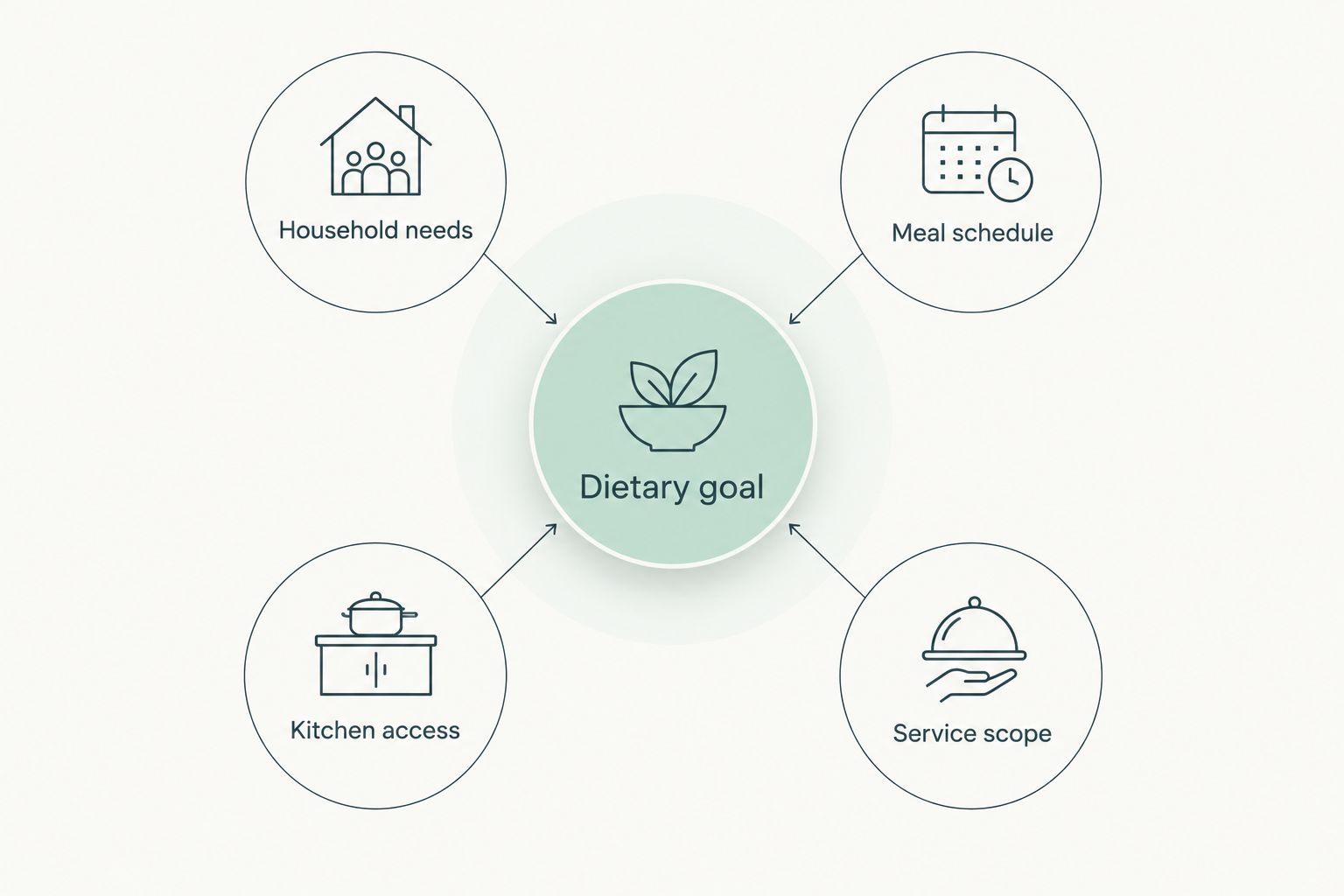
Organize your brief around these details:
- Dietary goal: Your main priority and any professional instructions.
- Household needs: Who will eat the meals and whose portions differ.
- Meal schedule: Which eating occasions need coverage.
- Kitchen access: Your location, equipment, and storage arrangements.
- Service scope: Questions about shopping, preparation, cleanup, and handoff.
This structure helps you compare proposals against the same request. For a 2026 booking inquiry, include your preferred start date and whether you want an ongoing arrangement or occasional preparation.
For Gabbeys, explain whether your priority is recurring in-home meal prep, a private dinner, or a celebration. A wedding or private party needs its own event brief rather than an assumption that weekly meal preparation covers the occasion.
Discuss your personalized meal prep
Share your Dallas or Fort Worth location, dietary priorities, household needs, and preferred schedule.
What affects your personalized quote?
Compare the proposed work, not just the name of the dietary approach. Household size, meal quantities, ingredient requirements, preparation complexity, visit frequency, and travel requirements are details to clarify in a quote.
Ask which services and expenses the proposal includes. Confirm grocery arrangements, containers, cleanup, and any requested nutrition calculations rather than assuming they are standard inclusions.
A focused menu brief also makes trade-offs easier to discuss. If exact recipe calculations matter more than extensive variety, say so before menus are developed.
Plan storage before the first visit
Your meal schedule must fit safe storage. For your 2026 routine, USDA guidance calls for keeping refrigerated food at 40°F or below, using refrigerated leftovers within 3–4 days, and reheating leftovers to 165°F.
Ask which meals should be refrigerated and which should be frozen, with clear preparation dates and reheating instructions. Do not assume a recurring weekly visit means every prepared dish belongs in the refrigerator until the next visit.
Which approach should you choose?
Choose balanced personalization unless a specific goal or restriction needs to lead the brief. Then add protein, portion, plant-food, or sodium requirements as clearly defined instructions.
Gabbeys is a fit for Dallas–Fort Worth households seeking personalized meal prep menus and attentive service. Ask for a proposal built around your household rather than selecting a diet label without discussing what it means.
FAQ
What's the best personal chef meal prep plan for everyday eating?
Balanced personalization is the default choice for everyday eating when no specific restriction needs to lead the menu. It starts with your preferences, portions, and household routine rather than a rigid diet label.
Can I combine a high-protein goal with vegetarian meal prep?
You can request a combined protein-focused and vegetarian brief. Define permitted ingredients and any established protein targets, then confirm whether the chef can meet the preparation and reporting requirements.
Will personal chef meal prep help me lose weight?
Personal chef meal prep does not guarantee weight loss. Portion-conscious preparation can follow your established eating plan, but serving consistency and weight outcomes are not the same thing.
Can a personal chef prepare meals for food allergies?
Suitability depends on the specific allergy and the chef's preparation arrangements. Confirm ingredient review, shared equipment, storage, and cross-contact practices before booking; do not rely on a menu label alone.
How much does personalized chef meal prep cost?
Request a personalized quote based on your household and service requirements. Clarify meal quantities, dietary complexity, shopping arrangements, visit frequency, and what the proposed scope includes.
What should I send with a Dallas or Fort Worth meal prep inquiry?
Send your location, household needs, dietary priorities, preferred schedule, and kitchen details. Separate essential restrictions from preferences and identify any nutrition information you require.
Does Gabbeys offer services beyond recurring meal prep?
Gabbeys provides private chef, catering, and event services, including private parties and weddings. Describe the occasion separately so the inquiry addresses the right service rather than assuming meal prep includes event service.
One last thing
Choose meals for the reheating experience, not only the freshly cooked presentation. Ask which components should stay separate and which dishes best suit your intended eating schedule. A menu you enjoy after storage is more useful than one designed only for the moment it leaves the stove.