Best overall: a staffed buffet. Best for a seated celebration: a plated lunch. Best for a conversation-led gathering: passed small bites. For a Dallas–Fort Worth baby shower in 2026, choose the catering style around the guest of honor’s comfort, your seating, and the way you want guests to spend time together.
- A staffed buffet leads the best catering styles for a Dallas–Fort Worth baby shower when guests want menu choice.
- Choose a plated lunch for a shared meal, or passed small bites when conversation comes first.
- Gabbeys catering suits hosts seeking personalized menus and attentive service for a baby shower.
- Compare staffing, rentals, dietary arrangements, and cleanup before choosing a catering proposal.
For a personalized menu and attentive service, start a conversation with Gabbeys. Share your Dallas or Fort Worth event address, preferred date, estimated attendance, and whether you envision a seated meal or an afternoon reception.
Why this matters
A baby shower needs more than an attractive food display. The catering format determines whether guests stand in line, carry plates, remain seated, or pause conversations for service.
Choose the guest experience before choosing individual dishes. A beautiful menu cannot resolve a room without enough seats or a serving station that blocks the entrance. For your 2026 celebration, decide where guests will eat and how food service will fit around gifts, games, and photographs.
What makes the best baby shower catering style?
Use these criteria to judge each format before discussing a menu:
- Guest comfort: Consider seating, mobility, and whether guests must carry food and drinks together.
- Meal expectations: Make clear whether the invitation promises a meal or light refreshments.
- Room flow: Keep serving areas separate from entrances, gifts, and the guest of honor’s seat.
- Menu personalization: Discuss preferences, allergies, and pregnancy-related food precautions before approving dishes.
- Service responsibility: Confirm who serves, replenishes, clears, and manages food temperatures.
- Complete scope: Compare proposals with the same staffing, equipment, rentals, and cleanup responsibilities.
No format wins every category. A buffet offers choice but requires circulation space; plated service keeps guests seated but needs a coordinated meal schedule.
Baby shower catering styles at a glance
These rankings compare service formats, not caterers. Each recommendation serves a different hosting priority.
| Rank and style | Best for | Standout feature | Key limitation |
|---|---|---|---|
| 1. Staffed buffet | A flexible shared meal | Guests choose dishes and portions | Requires a clear serving route |
| 2. Plated lunch | A seated celebration | Food comes to each guest | Requires seating and coordinated service |
| 3. Passed small bites | Conversation-led gatherings | Food circulates through the room | Needs a separate plan if guests expect lunch |
| 4. Brunch stations | A come-and-go daytime shower | Guests visit distinct serving points | Requires space and replenishment oversight |
| 5. Afternoon tea service | A gentle afternoon gathering | Small servings support an unhurried occasion | Can feel insufficient if a full meal is expected |
| 6. Family-style lunch | A close-knit table gathering | Shared platters encourage conversation | Passing dishes requires table space and reach |
1. Staffed buffet: best for a flexible shared meal
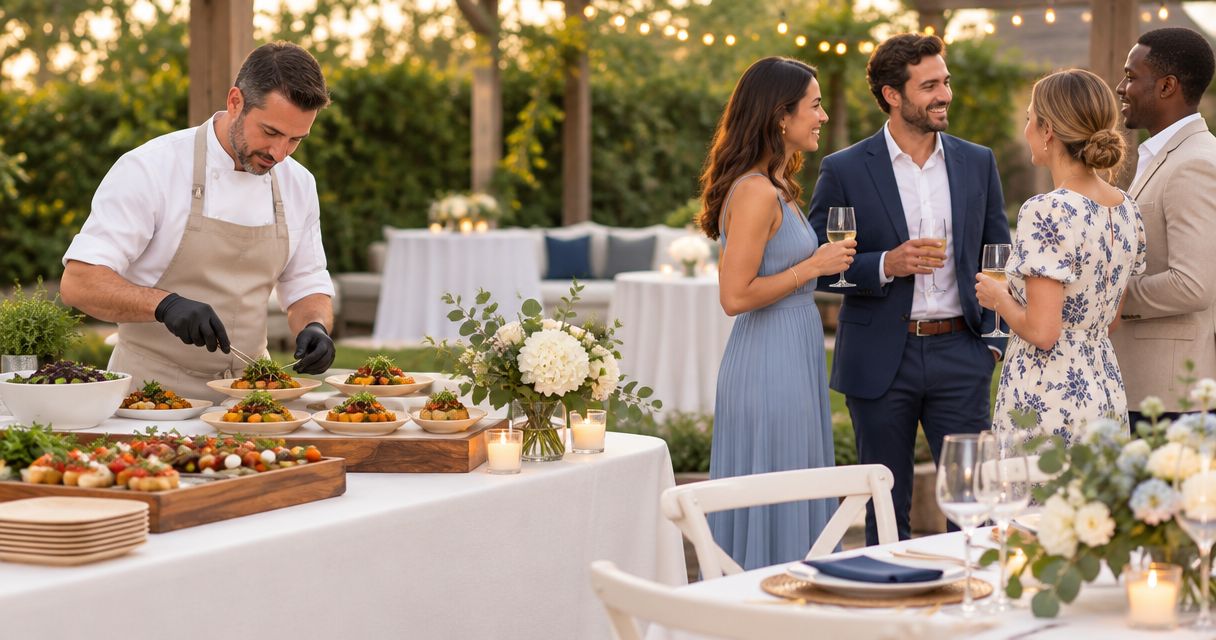
A staffed buffet presents the meal at a central serving area, with agreed staff responsibilities for service and replenishment. Guests choose from the menu rather than receiving the same plate. This is the strongest default when you want a recognizable meal without assigning every guest an individual entrée.
Best for: Hosts balancing menu choice with a shared mealtime.
Staffed buffet pros:
- Guests select the dishes they prefer.
- Portion selection stays with each guest.
- Service can fit around a defined meal window.
Staffed buffet cons:
- Guests must reach the serving area and carry plates unless assistance is arranged.
- Queues and serving equipment consume usable floor space.
Ask how dishes will be identified and who will assist anyone who prefers to remain seated. A staffed buffet still needs an agreed clearing plan; the format alone does not define that responsibility.
Verdict: Choose a staffed buffet as the default when your room supports a clear serving route.
2. Plated lunch: best for a seated celebration
A plated lunch brings prepared portions to seated guests. It makes the meal a distinct part of the shower rather than an activity guests move through independently. Choose this format when you want everyone settled before a welcome, toast, or shared conversation.
Best for: A celebration centered on seated hospitality.
Plated lunch pros:
- Guests do not need to carry their meals.
- Everyone has a defined place to eat.
- The meal provides a clear pause in the event schedule.
Plated lunch cons:
- Every diner needs an appropriate place setting.
- Late arrivals and last-minute meal changes complicate coordinated service.
Confirm how dietary meals will reach the correct guests without confusion. Discuss the kitchen, plating space, and serving responsibilities before selecting the menu; an elegant plate still needs a practical route to the table.
Verdict: Choose a plated lunch when guest comfort and a shared mealtime take priority over flexible arrival times.
3. Passed small bites: best for conversation-led gatherings
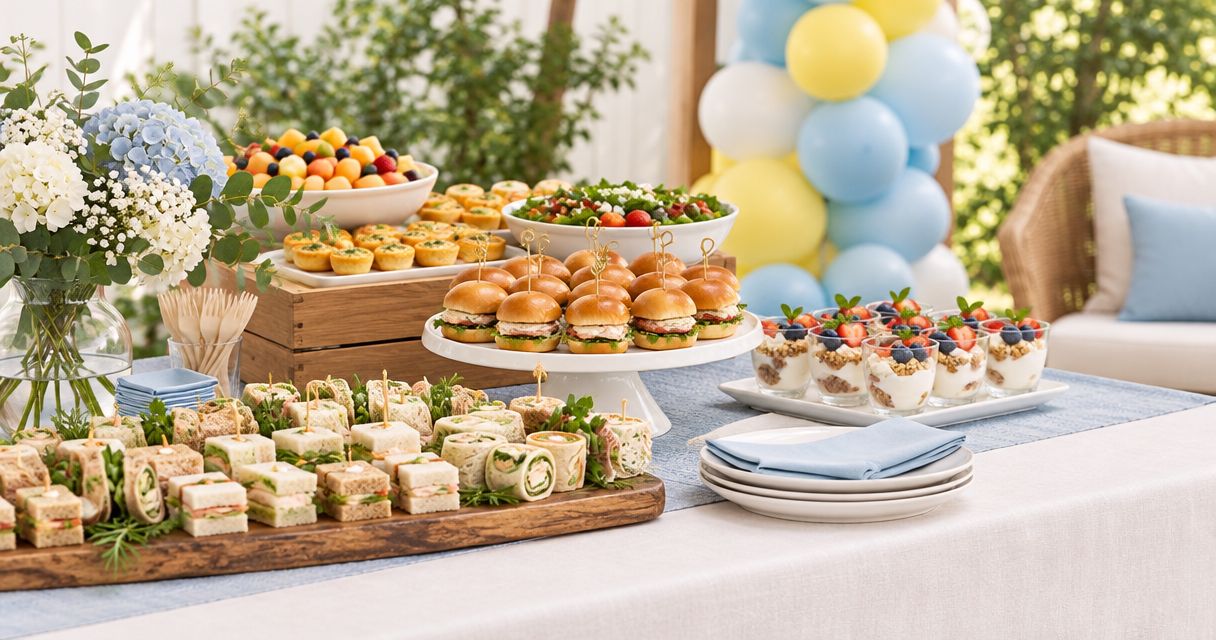
Passed small bites circulate with serving staff instead of bringing everyone to a buffet or dining table. Guests can continue conversations as food arrives. This format fits a reception-style shower, provided the invitation accurately describes the refreshments.
Best for: Hosts who want mingling to shape the occasion.
Passed small bites pros:
- Food reaches guests throughout the gathering space.
- A central buffet is not required.
- Small servings support conversation between bites.
Passed small bites cons:
- Guests expecting lunch need a more substantial food plan.
- Tray service does not remove the need for comfortable seating.
Ask how food will reach the guest of honor and anyone seated away from the main conversation. Specify bites that are manageable without balancing a knife, plate, and drink at once.
Verdict: Choose passed small bites for a clearly described reception, not as an unexplained substitute for lunch.
4. Brunch stations: best for a come-and-go daytime shower
Brunch stations divide service between separate food areas rather than a single buffet line. Guests visit the stations that interest them during an agreed service window. For a 2026 daytime shower, this works when arrivals are staggered and the venue has room for distinct serving points.
Best for: A daytime gathering with flexible arrivals.
Brunch stations pros:
- Separate stations give guests different places to gather.
- The format accommodates an open service window.
- Menu categories are easy to distinguish.
Brunch stations cons:
- Multiple serving points require additional usable space.
- Each station needs a replenishment and temperature-control plan.
Decide whether stations involve active preparation or simply food presentation. That distinction affects equipment and service requirements, so describe the experience you want rather than requesting “stations” without further detail.
Verdict: Choose brunch stations when flexibility matters and your layout supports more than one serving area.
5. Afternoon tea service: best for a gentle afternoon gathering
Afternoon tea service centers the occasion on small savory servings, sweets, and tea. It suits a shower where guests want to sit, talk, and enjoy refreshments without a formal lunch schedule. Describe the food clearly on the invitation so guests understand what to expect.
Best for: An afternoon celebration with an unhurried, seated atmosphere.
Afternoon tea service pros:
- Small servings support a gradual pace.
- Savory and sweet selections offer menu variety.
- The format gives refreshments a clear role in the occasion.
Afternoon tea service cons:
- Light refreshments do not necessarily replace a meal.
- Beverage service and used tableware still require attention.
Discuss non-tea drinks and the balance between savory food and sweets. Confirm whether service comes to the table or guests collect refreshments; those are different experiences despite sharing the same theme.
Verdict: Choose afternoon tea service when the invitation and timing clearly signal an afternoon gathering rather than lunch.
6. Family-style lunch: best for a close-knit table gathering
Family-style service places shared dishes on dining tables for guests to serve themselves. The meal stays within the conversation instead of sending guests to a separate serving area. It suits a gathering where guests are comfortable sharing table space and passing dishes.
Best for: A familiar group sharing a seated meal.
Family-style lunch pros:
- Guests remain at the table throughout the meal.
- Shared dishes create a conversational focal point.
- Guests can choose from the dishes within reach.
Family-style lunch cons:
- Platters compete with flowers, gifts, and place settings for table space.
- Passing dishes is not comfortable or practical for every guest.
Plan the table with serving dishes in mind before committing to decorative arrangements. Discuss how individual dietary meals will be handled without relying on shared utensils or assumptions about ingredients.
Verdict: Choose family-style lunch for a close-knit group with generous table space and suitable serving assistance.
How the catering styles are ranked
The ranking favors a complete meal, guest choice, and a straightforward hosting plan. A staffed buffet comes first because it combines those priorities, provided guests can comfortably reach the serving area.
Plated lunch ranks next for seated comfort. The remaining styles answer more specific needs: mingling, staggered arrivals, afternoon refreshments, or shared-table dining. No ranking here implies a measured service result or a comparison of caterer performance.
What affects your baby shower catering quote?
For a 2026 inquiry, ask Gabbeys catering to quote the event you actually intend to host. Personalized menus and attentive service are the reasons to start the conversation; the written proposal should establish the exact scope.
Provide the same brief when comparing proposals:
- Location and access: Event address, stairs, parking arrangements, and kitchen access.
- Guest count: Expected attendance and the process for confirming the final count.
- Menu and dietary needs: Meal format, preferences, allergies, and individual requirements.
- Service scope: Preparation, serving, replenishment, clearing, and cleanup responsibilities.
- Equipment and rentals: Who supplies tables, chairs, tableware, and food-service equipment.
- Schedule: Arrival access, food-service timing, and the end of service.
Ask for a personalized quote rather than assuming one format always costs less. Compare included responsibilities before comparing totals. For questions about location coverage, consult the guide to checking service areas and travel fees.
Keep pregnancy-related food safety in the plan
The FDA’s food-safety guidance for pregnant people recommends keeping cold food at 40°F or below and hot food at 140°F or above. Perishable food should not remain at room temperature for more than 2 hours, or 1 hour when the temperature is above 90°F.
Apply those limits to the actual service setting, especially an outdoor gathering. Confirm how food will be held, replenished, and removed from service rather than leaving platters out throughout the shower.
Discuss pregnancy-related food precautions and allergies before approving the menu. Menu labels help guests make choices, but they do not replace clear ingredient information and an agreed preparation plan.
Which catering style should you choose?
Choose a staffed buffet unless your guest list or room gives you a clear reason to choose something else. Select plated lunch when remaining seated matters most, or passed small bites when your invitation promises a reception rather than a meal.
Gabbeys catering suits baby shower hosts seeking personalized menus and attentive service. For your 2026 inquiry, bring the event address, estimated guest count, preferred format, dietary needs, and service expectations so the conversation leads toward a qualified proposal.
Plan your baby shower catering
Share your Dallas–Fort Worth event details and request a personalized menu and service quote.
FAQ
What's the best catering style for a Dallas–Fort Worth baby shower?
A staffed buffet is the best default when you want a complete meal with guest choice. Choose plated lunch instead when keeping everyone seated is the main priority.
Is a buffet better than a plated lunch for a baby shower?
A buffet is better for individual food selection; a plated lunch is better for a coordinated seated meal. Decide based on mobility needs, room layout, and the event schedule.
Can I serve small bites instead of lunch at a baby shower?
Yes, if the invitation clearly describes a reception with light refreshments rather than lunch. Agree on the food quantity and service window, and provide comfortable seating.
What should I send when requesting a baby shower catering quote?
Send the date, event address, estimated attendance, preferred service style, dietary requirements, and schedule. Ask the proposal to identify staffing, equipment, rentals, and cleanup responsibilities.
How much does baby shower catering cost in Dallas–Fort Worth?
Request a personalized quote based on your guest count, menu, location, equipment, and service scope. Compare proposals with matching responsibilities rather than assuming a particular format is always less expensive.
How do I plan catering around pregnancy-related food precautions?
Discuss pregnancy-related food precautions before approving the menu and confirm ingredient and temperature-control arrangements. Keep the guest of honor's individual medical guidance separate from general event planning.
What should I ask Gabbeys about baby shower catering?
Ask Gabbeys about a personalized menu and attentive service for your specific event. Confirm the event address, proposed format, dietary arrangements, and written service scope before making a booking decision.
One last thing
Give the guest of honor a comfortable place to eat before deciding where the food display belongs. Work outward from that seat: easy access, space for a plate and drink, and a clear plan for bringing food over. That small layout decision keeps hospitality at the center of the celebration.