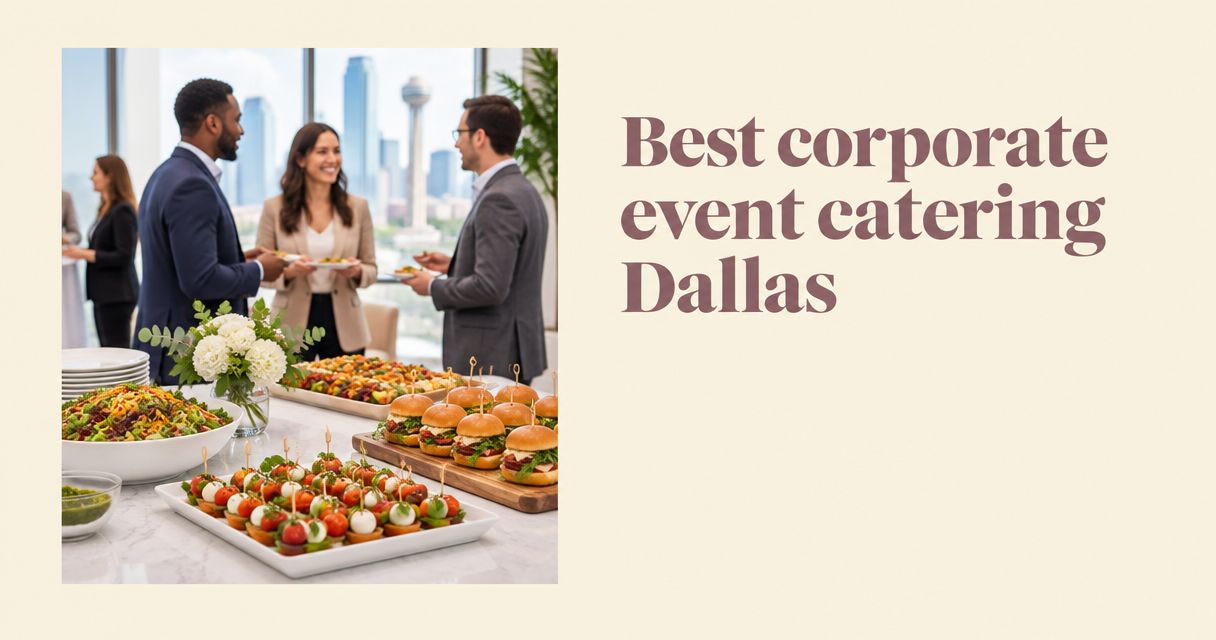

Best overall: plated dinner; best for mingling: passed appetizers; best for flexible portions: a buffet. For hosts seeking personalized private party catering in Dallas, Gabbeys is best for those who value personalized menus and attentive service.
- For the best private party catering Dallas celebration, choose the format around seating, conversation, and your event schedule.
- Plated dinners suit a shared focal moment; passed appetizers suit guests who want to circulate.
- Buffets offer portion flexibility, while family-style dinners bring shared dishes to the table.
- Gabbeys offers private chef, catering, and event services; discuss your preferred format in a personalized inquiry.
Why the catering format matters
Your catering format determines how guests experience the celebration. It shapes where they gather, when they eat, and whether conversation happens around a table or throughout your home.
For a Dallas or Fort Worth celebration in 2026, start with the evening you want—not a list of dishes. A birthday toast benefits from a shared pause. An open-house reception needs a different rhythm, with food that works around arrivals and conversation.
The same distinction applies to anniversary dinners, engagement parties, and intimate weddings. Choose how you want to host, then build a personalized menu around that experience.
What makes the best private party catering format?
Use these criteria before comparing menus or requesting proposals:
- Guest interaction: Decide whether everyone should dine together or move between conversations.
- Seating and space: Check dining seats, walking routes, serving surfaces, and kitchen access.
- Service rhythm: Match food service to speeches, photographs, entertainment, and arrivals.
- Dietary communication: Establish how individual meals, shared dishes, and ingredient questions will be handled.
- Host involvement: Specify who serves, replenishes, clears, and manages the kitchen.
- Complete scope: Compare staffing, equipment, rentals, setup, and cleanup—not menu descriptions alone.
These criteria matter more than which format looks most formal. A beautifully planned dinner still needs enough space for guests and service staff to move comfortably.
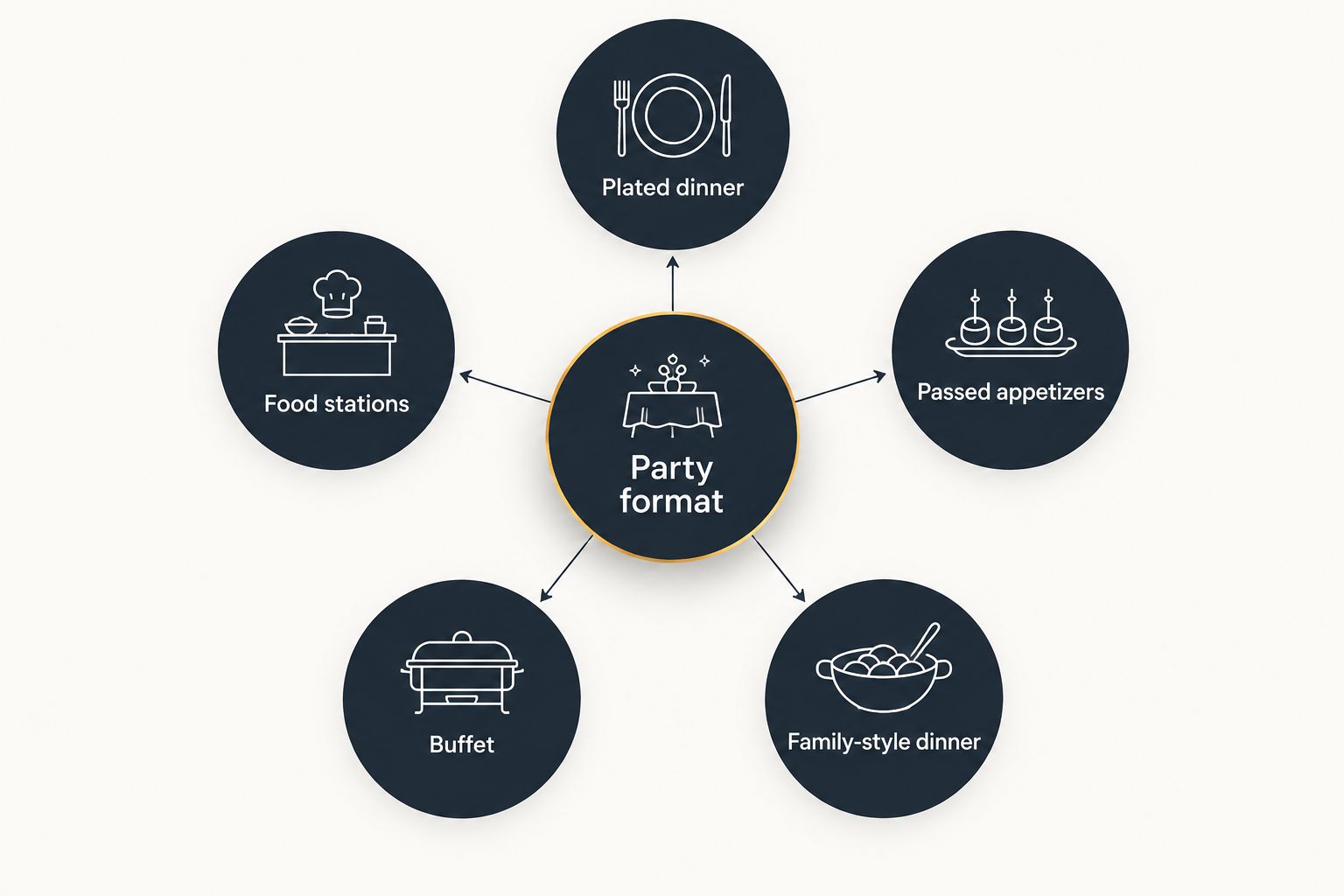
Private party catering formats at a glance
| Party format | Best for | Standout feature | Key limitation |
|---|---|---|---|
| Plated dinner | A seated milestone celebration | Courses create a shared dining rhythm | Requires coordinated seating and service |
| Passed appetizers | A conversation-led cocktail reception | Food reaches guests as they mingle | Needs a clear plan for meal expectations |
| Family-style dinner | A convivial gathering around one table | Shared platters make dining communal | Serving dishes compete for table space |
| Buffet | Guests who want flexible portions | Guests select their own combinations | Queues and replenishment need planning |
| Food stations | A party with distinct gathering areas | Separate service points create different destinations | Requires suitable space and staffing coordination |
These are service formats to discuss, not a statement that every caterer offers every option. Confirm the proposed format, staffing, and responsibilities before booking your 2026 celebration.
1. Plated dinner: best for a seated milestone celebration
A plated dinner brings each guest an individually arranged meal at their seat. Courses create a natural structure for an anniversary, birthday, or private dinner where the table is the center of the evening.
Best for: Hosts who want everyone present for the same conversation, toast, or celebratory moment.
Plated dinner pros:
- Gives the evening a clear dining sequence.
- Keeps guests seated during meal service.
- Allows individual meal assignments when agreed in advance.
Plated dinner cons:
- Requires seating for everyone dining at the same time.
- Makes late arrivals and unplanned meal changes harder to accommodate.
Before choosing a plated dinner, explain how the kitchen connects to the dining space. A beautiful table does not solve a difficult service route. Review what kitchen equipment a private chef needs for a dinner party before finalizing the setup.
For example, a dinner for 12 guests requires 12 dining places if everyone eats together. That is a planning example, not a recommended guest limit; the room and service plan determine what works.
Ask where courses will be finished and who will clear between them. Verdict: Buy into a plated dinner when the shared table is the main event; skip it when guests need to arrive and leave freely.
2. Passed appetizers: best for a conversation-led reception
Passed appetizers bring small portions to guests rather than asking everyone to sit for a meal. This format suits a private reception built around conversation, introductions, and movement.
Best for: Hosts planning a cocktail-style birthday, engagement celebration, or social gathering without a seated dinner.
Passed appetizer pros:
- Keeps guests free to circulate.
- Reduces dependence on full dining-table seating.
- Lets food service support conversation rather than interrupt it.
Passed appetizer cons:
- Guests need clear communication about whether dinner is included.
- Food distribution requires attention so quieter areas are not overlooked.
Tell your caterer whether appetizers are the entire food service or the opening to something more substantial. The menu and service plan need to reflect that distinction. Guests should not arrive expecting dinner when you intend a light reception.
Ask how dietary requests will be identified during service. An ingredient explanation delivered only at the kitchen counter does not help a guest receiving food elsewhere.
For your 2026 reception, also identify a place where guests can rest a glass and plate. Verdict: Buy into passed appetizers when mingling is the priority; skip an appetizer-only plan when your invitation promises a seated meal.
3. Family-style dinner: best for a convivial shared table
Family-style service places shared dishes on the table for guests to serve themselves. It combines the togetherness of a seated dinner with the flexibility of choosing from shared platters.
Best for: Close friends and family who want a welcoming, communal celebration.
Family-style dinner pros:
- Keeps the group together throughout the meal.
- Lets guests choose portions from the dishes offered.
- Makes sharing food part of the occasion.
Family-style dinner cons:
- Platters need space alongside glasses, place settings, and decorations.
- Shared utensils complicate plans that require strict separation of foods.
Start with the table, not the centerpiece. Ask which platters will remain on the table, which dishes need replenishment, and who will manage that service. A crowded surface makes a generous meal feel awkward.
As a planning exercise, a party of 12 seated across 3 tables needs a serving plan for each table. Do not assume one shared platter arrangement will serve every group comfortably.
Discuss allergies directly rather than treating a separate serving spoon as a complete safeguard. Verdict: Buy into family-style dining for a relaxed shared meal; skip it when table space or food-separation requirements make sharing impractical.
4. Buffet: best for flexible portions and menu selection
A buffet gives guests a designated place to select their meal. It works well when your celebration calls for choice without individually plating every guest’s food.
Best for: Hosts whose guests want to choose their own portions and combinations.
Buffet pros:
- Gives guests direct control over their selections.
- Keeps shared serving dishes off dining tables.
- Separates food selection from the seated dining area.
Buffet cons:
- Guests must leave their seats and move through a serving area.
- Queues, replenishment, and access need deliberate planning.
A buffet is not automatically a low-service option. Someone still needs to monitor dishes, answer questions, replenish food, and clear used tableware. Confirm those responsibilities in the proposal.
Walk the route from dining seats to the buffet and back. Keep that route separate from kitchen work wherever the space allows, and discuss assistance for guests who cannot comfortably carry a plate.
For an intimate wedding, consider how guests will reach the buffet around speeches and other scheduled moments. Verdict: Buy into a buffet when guest choice matters most; skip it when the room cannot support comfortable circulation.
5. Food stations: best for distinct gathering areas
Food stations divide service across separate locations instead of placing everything along one buffet. Each station gives guests a different destination within the celebration.
Best for: Hosts with enough usable space to create separate food-service areas.
Food station pros:
- Creates more than one place for guests to gather.
- Separates different parts of the menu.
- Supports a party that encourages movement between areas.
Food station cons:
- Requires coordination across service locations.
- Can create crowding if stations or walking routes are poorly positioned.
Ask whether each proposed station is self-service, attended, or finished to order. Those are different service arrangements, and the distinction belongs in the quote. Confirm any equipment and power requirements with the provider and venue.
Do not choose stations simply to fill a large room. Every location should have a purpose and enough space for guests to approach without blocking another activity.
Verdict: Buy into food stations when separate gathering areas improve the party; skip them when a single well-positioned service point would be simpler.
How the formats rank
Plated dinner takes the default position because it gives a seated celebration a clear focal point. The remaining formats each solve a different hosting need: mingling, communal dining, individual selection, or multiple gathering areas.
This is a suitability ranking, not a tasting score or a claim about service quality. For a 2026 booking, the strongest choice is the format that fits your room, guest needs, and event schedule.
What affects your personalized catering quote?
Format alone does not determine the scope of a catered party. Share enough detail for a proposal that reflects the evening you actually want.
Include:
- Location and access: Dallas or Fort Worth address, venue restrictions, parking, and kitchen access.
- Guest count: Expected attendance and when the final count will be confirmed.
- Menu direction: Preferences, dietary requests, allergies, and desired dining style.
- Event schedule: Arrival window, meal service, speeches, and finish time.
- Service responsibilities: Preparation, serving, replenishment, clearing, and cleanup.
- Equipment needs: Tableware, linens, serving equipment, and other rentals to confirm.
Gabbeys emphasizes personalized menus and attentive service. Describe what those priorities mean for your gathering: individual dietary conversations, a carefully paced dinner, or more time enjoying your guests. Request a personalized quote with the proposed scope clearly stated.
Plan your Dallas celebration
Share your location, guest count, preferred format, and dietary needs for a personalized inquiry.
Which private party catering format should you choose?
Choose a plated dinner if you are undecided and everyone can comfortably dine together. It gives a milestone celebration a shared beginning, meal, and focal moment.
Choose passed appetizers when conversation matters more than sitting down. Choose family-style dining for a communal table, a buffet for portion flexibility, or stations when separate service areas genuinely improve the layout.
For private party catering with Gabbeys, bring a preferred format and a clear description of the occasion. Let the menu discussion follow the experience you want—not the other way around.
FAQ
What's the best private party catering format in Dallas?
A plated dinner is the best default for a seated Dallas celebration built around a shared meal. Passed appetizers are a better fit when guests should circulate throughout the party.
Is a buffet better than a plated dinner for a birthday?
A buffet is better when guests should choose their own portions and combinations. A plated dinner is better when the birthday celebration needs everyone seated for the same meal and toast.
Can I plan a private party without dining seats for everyone?
A passed-appetizer reception does not depend on full dining-table seating. Still provide places to rest and make the invitation clear about whether guests should expect a meal.
How do I request a private party catering quote from Gabbeys?
Prepare your event location, date, expected guest count, preferred service format, and dietary needs for your inquiry. Ask the proposal to identify staffing, equipment, setup, and cleanup responsibilities.
What should I tell a caterer about food allergies?
Identify the specific allergies before the menu is finalized. Ask how preparation, shared utensils, ingredient questions, and individual service will be handled; do not assume a format guarantees separation.
Can the same catering formats work for a small wedding?
Yes, plated dinners, family-style meals, buffets, passed appetizers, and stations can each suit a small wedding with an appropriate service plan. Match the format to seating, venue access, and the reception schedule.
What should I confirm before booking catering in 2026?
Confirm the written menu, service format, guest-count process, staffing, equipment responsibilities, and event schedule. Also clarify dietary arrangements and who handles clearing and cleanup.
One last thing
Plan the toast before you finalize the food service. Decide where guests should be and whether service should pause. That small decision reveals whether your chosen format supports the celebration or competes with it.