Best overall: a staffed buffet for a mixed-agenda corporate event. Best for client hospitality: a plated dinner; best for a working lunch: individually boxed meals. This 2026 Dallas guide compares catering styles by guest experience, timing, venue needs, and the attention each format asks of your team.
- The best corporate event catering Dallas hosts choose matches the agenda, guest needs, and venue—not presentation alone.
- Choose a staffed buffet for mixed agendas, plated service for client dinners, and boxed meals for working lunches.
- Choose Gabbeys corporate event catering when personalized menus and attentive service are your priorities.
- Request a personalized quote that separates food, staffing, equipment, rentals, and venue requirements.
Why the catering style matters
Your catering format shapes when guests move, where conversations happen, and whether the meal supports the program or interrupts it. An exquisite menu still needs a practical service plan.
Gabbeys is best for Dallas–Fort Worth hosts who want corporate event catering with personalized menus and attentive service. Explore Gabbeys with your event brief ready, then ask which format fits your venue and occasion.
For a 2026 event, settle the meal's role before discussing individual dishes. A working lunch needs a different rhythm from an executive dinner, employee celebration, or standing reception. Choose the experience first; build the menu around it.
What makes the best corporate catering style?
Use these criteria before comparing menus:
- Agenda fit: Can guests eat without missing the presentation, meeting, or reason they came?
- Guest comfort: Does the format suit seated dining, standing conversation, and guests who need assistance?
- Dietary clarity: How will requested meals reach the right guests, and who answers ingredient questions?
- Venue fit: Where will preparation, holding, service, clearing, and waste handling happen?
- Service attention: What support does the format need before, during, and after the meal?
- Quote clarity: Does the proposal identify responsibilities rather than leaving staffing and equipment assumed?
Treat any unresolved venue restriction as a decision to settle before choosing a format. Personalization works best when the menu and service plan reflect the same brief.
Corporate catering styles at a glance
| Rank and style | Best for | Standout strength | Key limitation |
|---|---|---|---|
| 1. Staffed buffet | Mixed-agenda team events | Guests choose from a shared menu | Queues need space and management |
| 2. Plated dinner | Client and executive hospitality | A coordinated seated meal | Courses need protected agenda time |
| 3. Food stations | Networking-led celebrations | Food destinations encourage movement | Service points compete for floor space |
| 4. Boxed meals | Working lunches and training | Individually organized distribution | Less suited to a celebratory dining experience |
| 5. Family-style dining | Relationship-building team dinners | Shared dishes support table conversation | Serving dishes occupy table space |
| 6. Passed appetizers | Standing receptions | Guests can circulate while eating | Small bites require clear meal expectations |
These are service formats to discuss, not a claim that every caterer provides every option. Confirm the proposed format, staffing, and scope in writing.
1. Staffed buffet: best for mixed-agenda corporate events
A staffed buffet presents the meal at a shared serving area, with service support defined in the proposal. Guests choose their dishes rather than receiving the same composed plate at their seats.
Best for: Team celebrations, company gatherings, and events where guest choice matters more than synchronized courses.
A buffet is the default recommendation when your event combines eating, informal conversation, and a flexible program. That flexibility disappears if the serving line blocks the entrance or everyone is released at once without a plan.
Staffed buffet pros:
- Guests can choose among the planned dishes.
- The meal does not depend on serving each table a separate course.
- A staffed service point gives guests somewhere to ask menu questions.
Staffed buffet cons:
- Queues can interrupt the event's flow.
- Shared utensils require an explicit plan for dietary requests and cross-contact concerns.
Ask where guests queue, how dishes are replenished, and how requested meals are identified. A label alone does not resolve every dietary concern.
Verdict: Choose a staffed buffet for a flexible team event; skip it when your venue cannot accommodate the line.
2. Plated dinner: best for client and executive hospitality
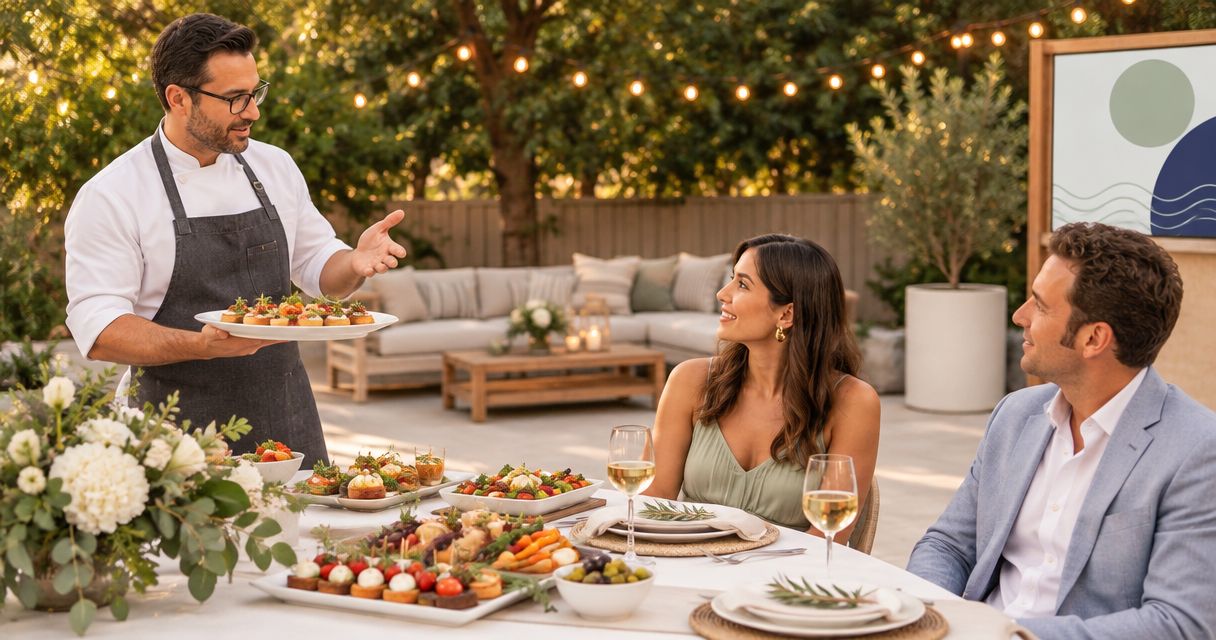
Plated service brings composed dishes to seated guests. It gives a client dinner a clear beginning, progression, and close, with the service sequence coordinated around conversation and remarks.
Best for: Client appreciation dinners, executive gatherings, and formal recognition evenings.
This format suits an event where the table is the center of the experience. Protect the meal's timing rather than treating courses as background activity during an unpredictable program.
Plated dinner pros:
- Guests remain seated during meal service.
- Individual meal choices can be assigned before service.
- Courses create a defined structure for the evening.
Plated dinner cons:
- Late arrivals and extended speeches complicate the sequence.
- Meal assignments need accurate guest and seating information.
Ask how dietary meals will be identified discreetly and who signals that a course can begin. Include clearing in the discussion; removing plates during a key conversation deserves as much thought as presenting them.
Verdict: Choose plated service when attentive hospitality and an uninterrupted seated experience lead the brief.
3. Food stations: best for networking-led celebrations
Food stations distribute service across separate destinations rather than a single serving line. Each station becomes a place guests visit, making the room's circulation part of the experience.
Best for: Company celebrations and receptions where introductions and movement are central.
Stations need a floor plan, not just appealing menu ideas. Place them so guests can approach, choose, and move away without gathering in doorways or blocking access to seating.
Food station pros:
- Separate destinations give guests reasons to circulate.
- Different stations can organize distinct menu themes.
- Guests can explore the meal at their own pace within the service window.
Food station cons:
- Each service point needs its own space and operating plan.
- Popular stations can still develop queues.
Confirm whether each station is attended, what preparation happens there, and where equipment belongs. Do not assume that a station includes live cooking or that your venue permits it.
Verdict: Choose stations for movement-led hospitality; skip them when the room needs to stay focused on a presentation.
4. Boxed meals: best for working lunches and training
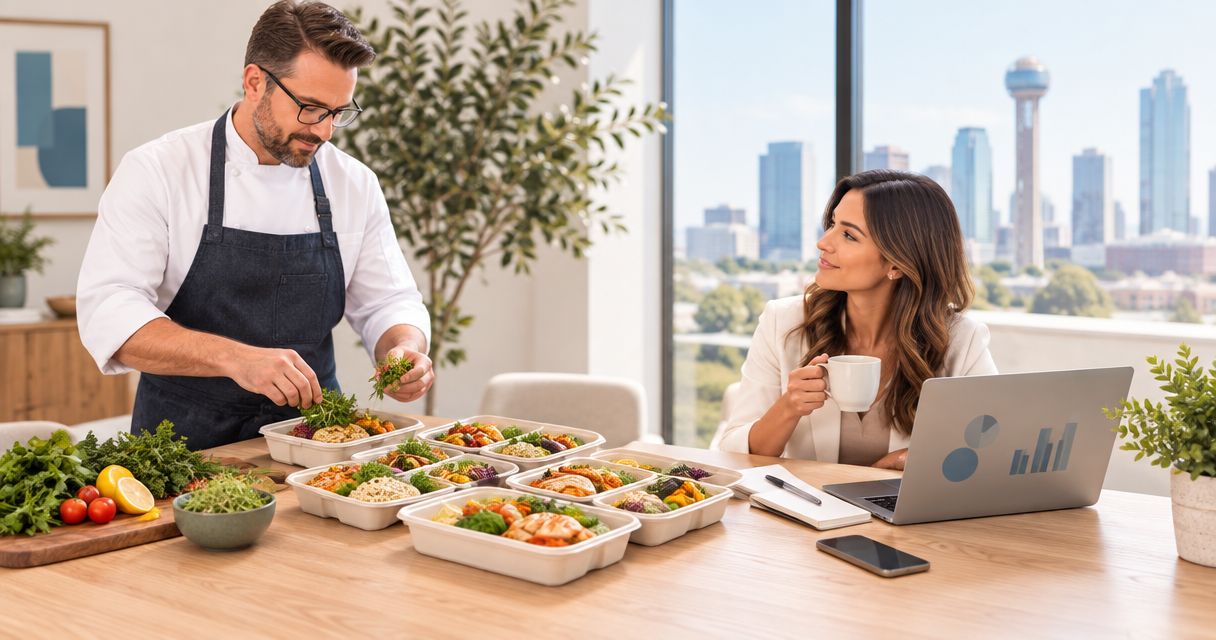
Boxed meals package an individual's meal for organized distribution. Their strength is practical: the meal can be assigned and handed out without arranging a shared serving display.
Best for: Training sessions, internal workshops, and lunches built around a continuing work program.
This is a focused choice rather than the default for every corporate occasion. Presentation, labeling, collection, and waste handling still deserve attention, especially when guests eat at their workstations.
Boxed meal pros:
- Individual meals are straightforward to assign.
- Distribution can be planned around meeting breaks.
- A shared buffet footprint is unnecessary.
Boxed meal cons:
- Packaging creates waste that needs collection.
- The format offers less tableside hospitality than a served dinner.
Ask how dietary requests are labeled and separated, where meals wait before distribution, and who manages leftovers. Confirm appropriate food handling rather than assuming a boxed meal can sit out throughout the meeting.
Verdict: Choose boxed meals when the working agenda comes first; skip them when the meal is the main occasion.
5. Family-style dining: best for relationship-building team dinners
Family-style service places shared dishes on the table for guests to pass and serve. It combines a seated meal with a more participatory way of dining.
Best for: Team retreats, leadership dinners, and gatherings designed around conversation among tablemates.
The appeal is the shared table. The practical challenge is making room for food alongside glassware, place settings, floral arrangements, and any meeting materials.
Family-style dining pros:
- Guests remain together at the table.
- Shared dishes give tablemates a natural point of interaction.
- Guests choose portions from the dishes presented.
Family-style dining cons:
- Platters and bowls reduce usable table space.
- Passing dishes does not suit every guest's access needs.
Request a table layout before committing. Discuss assistance, replenishment, and separately handled dietary meals so the warmth of sharing does not place an obligation on guests.
Verdict: Choose family-style dining for a conversation-first dinner; skip it when table space or guest comfort makes sharing impractical.
6. Passed appetizers: best for standing corporate receptions
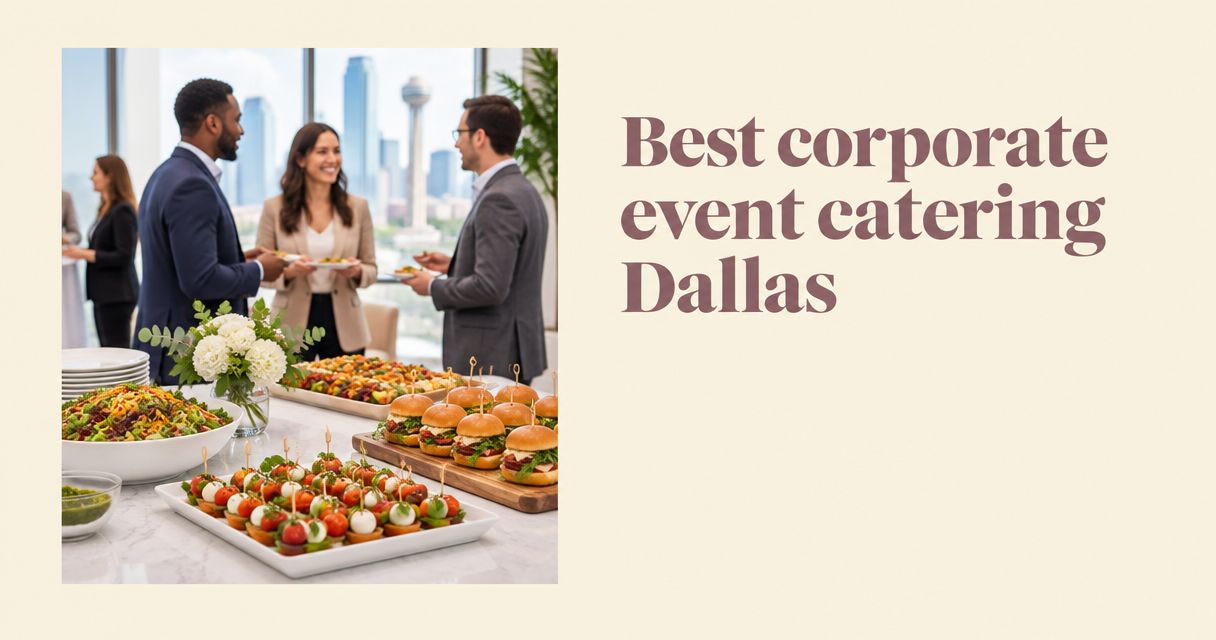
Passed appetizers circulate with serving staff while guests mingle. The format keeps food moving through the reception instead of asking everyone to visit a central display.
Best for: Welcome receptions, launch gatherings, and corporate occasions built around standing conversation.
Decide whether the reception replaces dinner or simply precedes it. Guests need clear expectations, and the menu needs to reflect the occasion rather than relying on the word reception alone.
Passed appetizer pros:
- Guests can continue circulating during service.
- Food reaches guests away from a fixed serving point.
- A sequence of small dishes can introduce menu variety.
Passed appetizer cons:
- Standing with food and a drink can become awkward.
- Dietary options need a reliable route to the guests requesting them.
Ask about seating, clearing, and how service reaches quieter areas of the room. Confirm the full food plan before describing the event to guests as dinner.
Verdict: Choose passed appetizers for a mingling-led reception; skip them as an undefined substitute for a complete meal.
How the styles rank
This ranking prioritizes agenda fit, guest comfort, dietary clarity, venue fit, service attention, and quote clarity. It compares the practical fit of formats, not caterer performance scores.
The buffet takes the default position because it supports guest choice without requiring a course-by-course seated program. A plated dinner takes priority when client hospitality matters most. Boxed meals move ahead when the meeting must remain the focus.
For an extended program, use the all-day conference catering guide to plan how separate meal breaks fit together. Choosing lunch alone does not settle the entire day's service needs.
Build a brief that earns a useful quote
Give Gabbeys a 3-part brief: the occasion, the guest needs, and the venue conditions. A personalized recommendation starts with what you want guests to experience, not a dish list copied from another event.
- Occasion: State the purpose, date, Dallas or Fort Worth location, agenda, and whether food supports or anchors the gathering.
- Guest needs: Share the expected guest count, dietary requests, seating needs, and desired level of formality.
- Venue conditions: Explain kitchen access, loading arrangements, available equipment, service space, and venue restrictions.
For your 2026 proposal, ask for a clear explanation of food, service staff, preparation requirements, rentals, equipment, clearing, and applicable charges. These are items to clarify, not assumed inclusions. Menu complexity, guest count, service format, and venue logistics all belong in the cost discussion.
Compare 2 proposed layouts when choosing between a buffet and stations. Seeing guest movement on the same room plan makes the trade-off clearer than comparing menu descriptions alone.
Assign 1 event contact to approve changes and coordinate with the catering team. Then confirm who handles the program cues on the day.
Plan your corporate gathering
Share your location, guest count, agenda, and dietary needs to discuss a personalized quote.
Which catering style should you choose?
Choose a staffed buffet if you are undecided and your venue has room for an orderly serving area. It is the starting point for a mixed-agenda team gathering, not an automatic answer for every corporate event.
Choose plated service for a client dinner, stations for a movement-led celebration, and boxed meals for a working lunch. Choose family-style dining when the shared table is the point, or passed appetizers when guests are invited to mingle rather than sit for dinner.
Ask Gabbeys to connect personalized menus and attentive service to those practical choices. The right recommendation should explain both why a format fits and what it requires from your venue.
FAQ
What's the best catering style for a Dallas corporate event?
A staffed buffet is the default choice for a mixed-agenda team event with space for an orderly serving area. Choose plated service instead when a seated client dinner is the main occasion.
Is plated catering better than a buffet for a client dinner?
Plated catering is the better fit when you want guests to remain seated through a coordinated meal. A buffet suits a more flexible gathering, but guests must leave their seats to select food.
What should I include when requesting a corporate catering quote in 2026?
Include the event date, location, guest count, agenda, dietary requests, and venue conditions. Ask the proposal to explain the menu, staffing, equipment, rentals, clearing responsibilities, and applicable charges.
Are boxed meals suitable for an executive event?
Boxed meals suit an executive working session when the meeting takes priority over dining. Choose a served meal when the purpose is client hospitality or a formal celebration.
How do I plan corporate catering for dietary restrictions?
Collect dietary requests before confirming the menu and discuss how each meal will be prepared, identified, and served. Ask specifically about cross-contact concerns rather than relying on dish labels alone.
Can passed appetizers replace a corporate dinner?
Passed appetizers should replace dinner only when the full menu and service plan are designed for that purpose. Confirm the plan with the caterer and tell guests whether to expect a meal or a reception.
What makes Gabbeys a fit for a Dallas–Fort Worth corporate event?
Gabbeys emphasizes personalized menus and attentive service for clients seeking a luxury catering experience. Share your event brief and request a recommendation that addresses the agenda, guest needs, and venue.
One last thing
For your 2026 event, walk the route from a guest's seat to the food and back before approving the layout. Include the space needed to pause, ask a question, and let another guest pass.
Approve the guest journey alongside the menu. A carefully chosen dish cannot fix a serving area that interrupts the room.