Yes—a private chef can prepare a tasting menu before your wedding when a tasting is part of the agreed service. Use your private chef wedding tasting menu to assess flavor, presentation, and dietary adjustments, but confirm the tasting’s scope and terms separately from the wedding booking.
- A private chef wedding tasting menu lets you evaluate proposed dishes before approving your wedding menu.
- Confirm tasting arrangements separately; a wedding catering inquiry does not establish what is included.
- Gabbeys wedding catering suits couples seeking personalized menus and attentive service.
- Taste with the reception format in mind, then record agreed dishes, adjustments, and service requirements.
Why this matters
A beautiful tasting plate answers only part of your wedding planning question. You also need to know how that dish will reach your guests, accommodate dietary needs, and fit the reception schedule.
For your 2026 Dallas or Fort Worth wedding, start with the experience you want guests to have. Gabbeys provides private chef, catering, and event services, with personalized menus and attentive service as reasons to inquire. Ask specifically about a pre-wedding tasting rather than assuming it comes with the wedding service.
Approve the menu and the service plan together—not the food alone. That keeps the tasting connected to the celebration you are actually arranging.
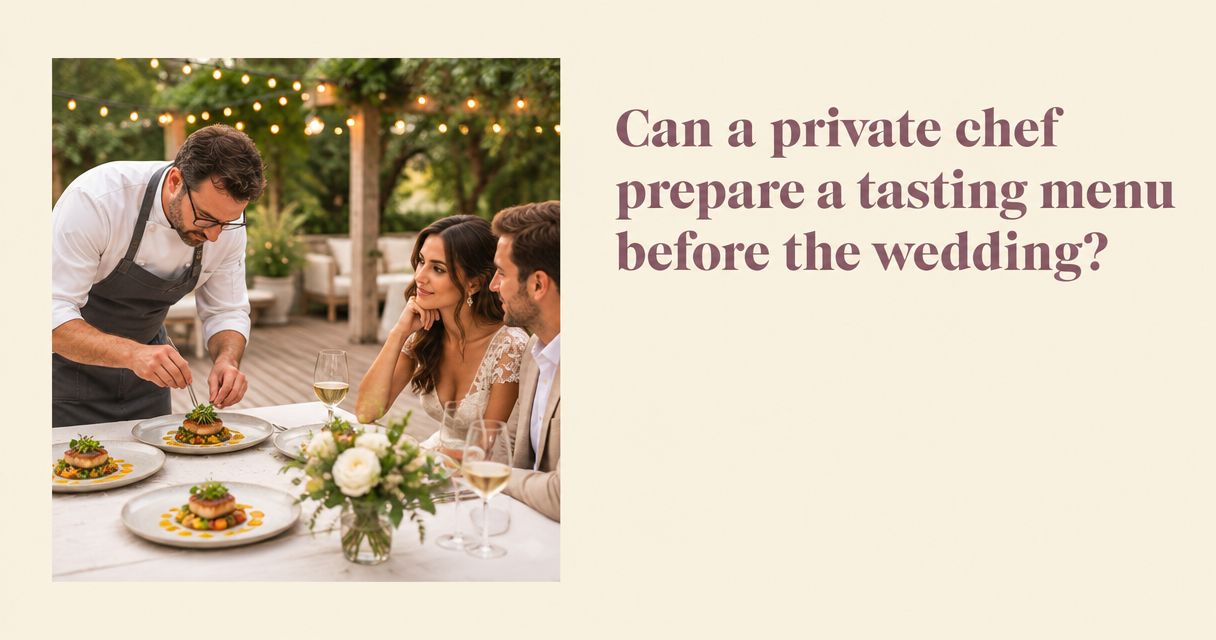
Can a private chef prepare a tasting menu before the wedding?
Yes. A pre-wedding tasting can be arranged with a private chef, subject to the chef’s agreement and the scope of the booking. The practical next step is to request a tasting proposal that identifies what you will evaluate and what happens afterward.
Use this sequence to make the appointment purposeful:
- Share your wedding brief. Include the location, intended guest count, reception format, dietary needs, and the atmosphere you want.
- Agree on the tasting scope. Ask which dishes you will sample, who should attend, and whether alternatives are part of the appointment.
- Evaluate the proposed meal. Discuss seasoning, texture, presentation, portion expectations, and how the dishes work together.
- Record the decisions. Request a written menu reflecting your selections, unresolved questions, and any agreed adjustments.
You are not simply choosing favorite dishes. You are deciding whether the proposed meal feels right for your guests and works within the event plan.
Is a pre-wedding tasting the same as a tasting-menu reception?
No. A pre-wedding tasting is an appointment to evaluate proposed food; a tasting-menu reception is the meal format served during the wedding.
Be explicit in your inquiry. If you want to sample a proposed plated dinner, say that. If you want the wedding itself to feature a sequence of small courses, describe that separately so the chef can address both requests.
Do you need to book the wedding before arranging a tasting?
Ask whether the chef offers tastings before a wedding agreement, after an agreement, or under a separate arrangement. Do not treat a tasting appointment as confirmation of wedding service.
For a 2026 wedding, request the applicable terms in writing before committing. Your tasting appointment and your wedding booking should each have a clear scope.
Match the tasting to your reception format
The best tasting evaluates food in the context of its intended service. Ask the chef to explain any differences between the tasting presentation and the reception presentation.
The following formats are planning options to discuss, not confirmed service packages or tasting inclusions.
| Reception format | Best for | What to assess at the tasting | Trade-off to discuss |
|---|---|---|---|
| Plated dinner | Couples who want a defined course sequence | How each plate tastes and how courses fit together | Individual service needs coordination with the reception schedule |
| Buffet | Couples who want guests to choose from a selection | How dishes complement each other on one plate | A tasting plate does not demonstrate the guest serving process |
| Family-style meal | Couples who want shared dishes at the table | Whether the menu works as a shared meal | Serving dishes need to fit alongside the table setting |
None of these formats replaces the need for a service plan. A plated tasting does not establish how buffet service will operate, and a shared platter does not establish how every guest’s dietary needs will be addressed.
Ask the chef to identify what the tasting demonstrates and what still requires a separate decision. This makes comparisons clearer without turning the appointment into a full reception rehearsal.
Why pre-wedding tasting arrangements vary
The tasting should reflect your wedding brief rather than a generic sample meal. Include these details when requesting a personalized proposal:
- Menu scope. Identify whether you want to assess selected dishes, a proposed meal, or alternative preparations.
- Dietary needs. Separate food allergies, other dietary restrictions, and personal preferences so each receives an appropriate discussion.
- Reception format. Explain whether guests will receive plated courses, choose from a buffet, or share dishes.
- Guest count. Give the chef the intended wedding attendance as well as the proposed tasting attendance.
- Location and kitchen. Share the tasting location, wedding venue, and any known preparation or equipment restrictions.
- Service expectations. Describe the desired pacing and any coordination needed with speeches or other reception moments.
These details also belong in the cost discussion. Ask what affects the personalized quote, what the tasting agreement covers, and whether any wedding-related services are quoted separately. Do not assume that food preparation, service, equipment, or venue coordination all sit within one scope.
What should you assess while tasting?
Flavor and balance
Describe what you notice in plain language: too rich, too delicate, more acidity needed, or a texture you particularly enjoy. Specific feedback gives the chef something concrete to address.
Taste with the whole meal in mind. A dish you love alone still needs to sit comfortably beside the rest of the menu, especially when several courses repeat similar ingredients or textures.
Presentation and portion expectations
Ask whether you are seeing a sample portion or the intended wedding presentation. Those are different things, and the distinction belongs in your notes.
Discuss the overall meal rather than judging one plate in isolation. Confirm what guests are intended to receive across the reception, without assuming that anything outside the tasting is included.
Dietary adaptations
If an adapted dish is central to the guest experience, ask how it will be evaluated. Do not assume that tasting the standard dish approves its alternative preparation.
For allergies, discuss ingredients, preparation practices, and communication with serving staff. A successful tasting is not an allergy-safety guarantee. Ask the chef to explain the proposed precautions and any limitations before accepting the menu.
Service practicality
Ask how the chef intends to finish and serve the selected dishes at the venue. Keep this discussion tied to the actual kitchen and reception arrangement rather than an ideal setup.
The guide to connecting wedding catering to your venue’s kitchen addresses the next planning conversation. Bring any venue restrictions to the tasting so food decisions and kitchen requirements are considered together.
Turn your tasting notes into a wedding menu
After the appointment, separate preferences from approvals. A comment that you enjoyed a sauce is not the same as approving the complete dish for wedding service.
Use a simple written sequence: Menu brief, Tasting notes, Agreed changes, and Written approval. Keep unresolved items visible until you and the chef have addressed them.
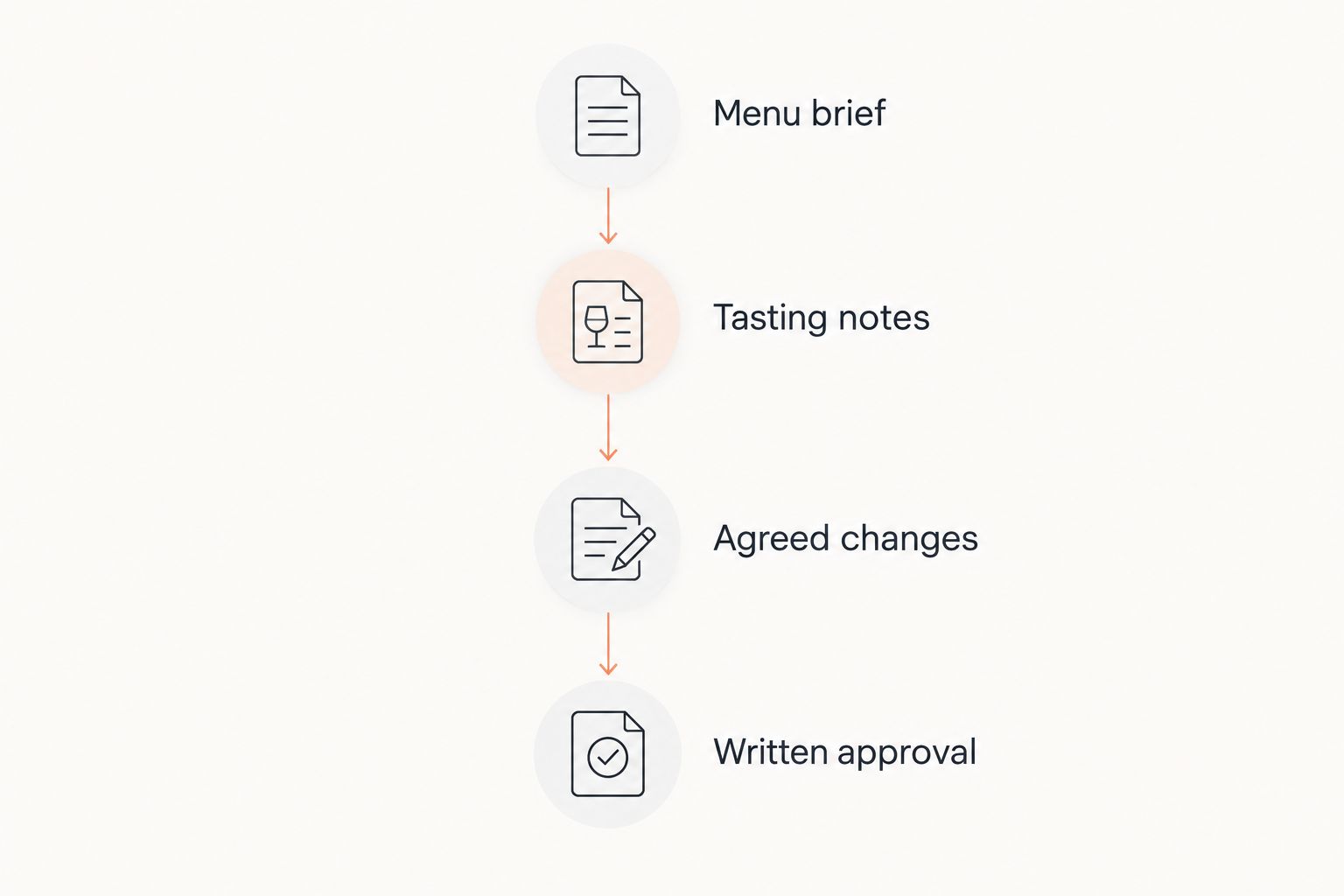
For your 2026 wedding, date the approved menu and retain the version that reflects the agreed changes. If a later adjustment becomes necessary, ask for an updated written record rather than relying on a conversation.
The same record should distinguish food decisions from service decisions. List the dishes separately from the reception format, dietary arrangements, and any items still awaiting confirmation.
Use menu style to shape the guest experience
A tasting should help you decide how you want dinner to feel, not just which entrée you prefer. Think about whether the meal should create a defined sequence of moments or leave more room for guests to make individual choices.
Comparing wedding catering menu styles means looking beyond dish names: plated, buffet, and shared-table meals ask different things of the reception schedule and table arrangement. For a Dallas or Fort Worth wedding, discuss those choices against your own venue conditions rather than adopting another event’s plan unchanged.
A couple who values a carefully paced dinner should ask how courses fit around speeches. A couple who prefers a less structured meal should ask how guests will be served without losing the sense of occasion.
Keep the tasting focused on that preference. The right menu is the one you enjoy and can describe clearly enough to plan.
What should you send with your tasting inquiry?
A qualified inquiry gives the chef enough context to discuss the wedding and the tasting separately. For a 2026 celebration, send a concise brief rather than requesting a sample menu without event details.
Include:
- Your wedding date and whether it is confirmed.
- The Dallas or Fort Worth venue, or the location under consideration.
- Your intended guest count and reception format.
- Cuisine preferences and dishes with personal meaning.
- Known dietary requirements and allergy questions.
- Who you would like to attend the tasting.
- The decisions you want the appointment to resolve.
Gabbeys wedding catering is best for couples seeking personalized menus and attentive service. A detailed inquiry lets you discuss those priorities without assuming a particular tasting arrangement or menu inclusion.
The trade-off is that a personalized proposal requires decisions from you. You will need to explain preferences, review the proposed scope, and confirm what meets your needs rather than relying on an assumed package.
Discuss your wedding menu
Share your venue, guest count, dietary needs, and request for a pre-wedding tasting.
FAQ
Can a private chef prepare a wedding tasting menu before we book?
A private chef can arrange a pre-booking wedding tasting if that is part of the chef’s agreed process. Ask about the tasting terms separately, and do not treat the appointment as confirmation of wedding service.
What should we ask to taste before our wedding?
Ask to evaluate the dishes and adaptations that will determine your menu decision. Confirm whether the appointment covers selected samples, alternative preparations, or the proposed meal.
Is a private chef wedding tasting menu included with catering?
A private chef wedding tasting menu is included only when the agreement explicitly says so. Ask what the tasting covers and request a personalized quote for the proposed arrangement.
Can we bring our wedding planner to the tasting?
Ask the chef to confirm who can attend the tasting before inviting your wedding planner or other guests. A planner’s questions can then focus on how the selected meal fits the reception schedule.
Should we discuss food allergies before the tasting?
Discuss food allergies before the tasting so the chef can explain proposed preparations, precautions, and limitations. Keep allergy requirements distinct from preferences, and confirm the arrangements for wedding-day service separately.
Does tasting a dish mean it will be served exactly the same way at the wedding?
Tasting a dish does not establish its wedding-day portion or presentation unless those details are agreed. Ask which elements the sample represents and record any differences in the approved menu.
Can we ask Gabbeys about a wedding tasting in Dallas or Fort Worth?
Include your request for a pre-wedding tasting in your Gabbeys wedding inquiry for Dallas or Fort Worth. Share the venue, guest count, menu preferences, and dietary needs, then confirm the proposed tasting arrangements directly.
One last thing
Before approving your 2026 wedding menu, ask: What did this tasting not establish? That question separates a delicious appointment from a finished catering plan.
Confirm any unresolved presentation, dietary, kitchen, or service details in writing. Your final decision should give you confidence in both the meal and the plan for serving it.