

Your wedding catering menu planning timeline should follow agreed decision deadlines, not a fixed number of weeks: settle the event brief, venue requirements, service format, menu revisions, and final approval in that order. A menu is not ready for your wedding simply because you have chosen the dishes; guest needs, kitchen access, staffing responsibilities, and reception timing must also be confirmed.
- Build your wedding catering menu planning timeline around written approval deadlines, not an assumed planning duration.
- Gabbeys wedding catering suits couples seeking personalized menus and attentive service.
- Confirm venue requirements and dietary needs before approving dishes and reception service.
- Keep menu approval, final guest count, and the reception schedule as separate decisions.
How long does it take to plan a wedding catering menu?
Plan backward from the caterer’s written deadlines for menu approval and final guest details. Those dates give you a usable schedule. A general countdown does not tell you when your venue must approve equipment, when guests must submit meal choices, or when changes stop being accepted.
For a Dallas or Fort Worth wedding in 2026, begin your inquiry with the date, venue, estimated attendance, and the kind of dinner you want. You can introduce those details when discussing wedding catering with Gabbeys. Ask for the planning milestones before treating a proposed menu as final.
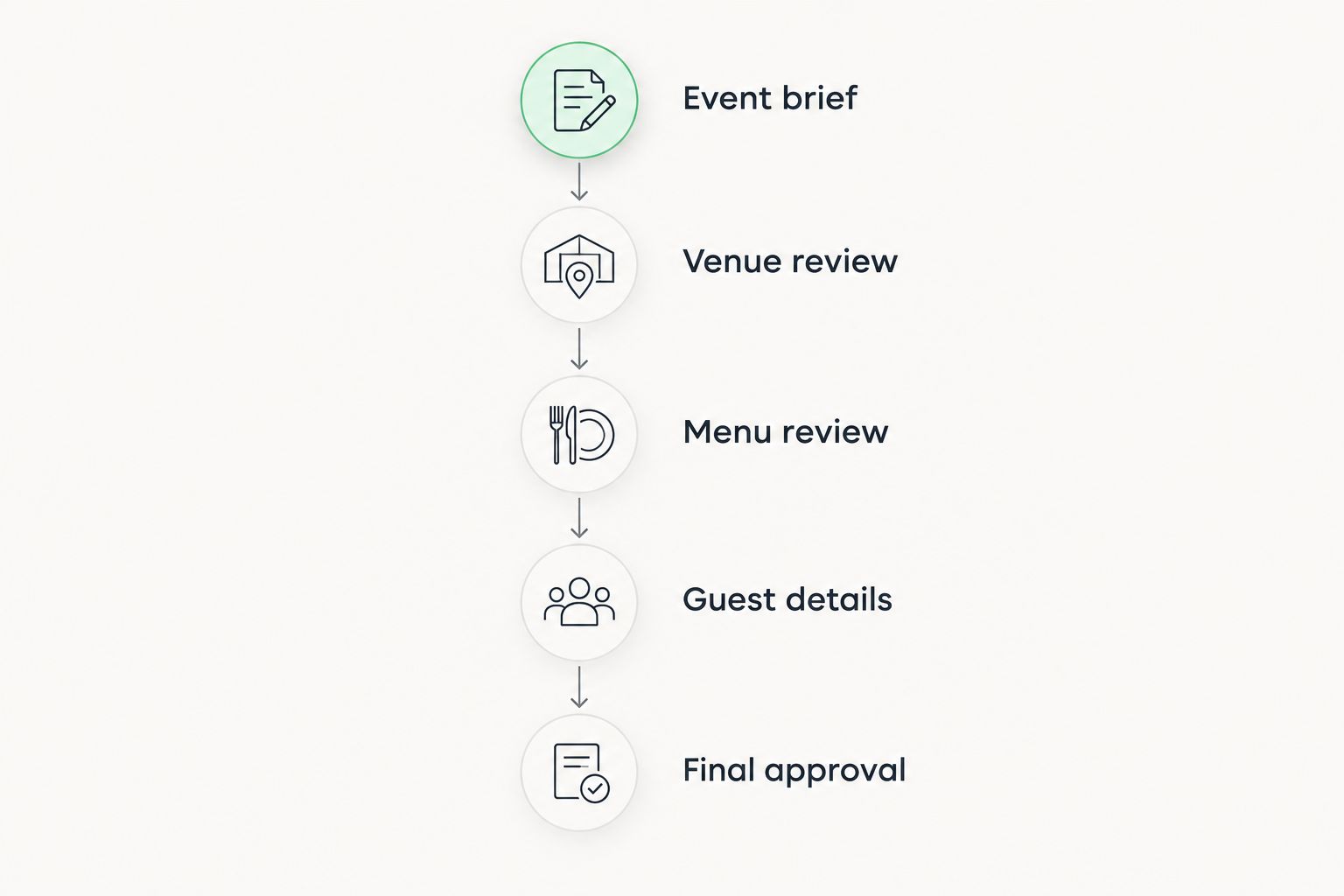
Use this sequence to organize the conversation:
- Event brief: Share the setting, guest estimate, dietary needs, spending priorities, and desired atmosphere.
- Venue review: Confirm kitchen access, equipment responsibilities, service areas, and access restrictions.
- Menu development: Discuss dishes alongside the proposed service format and reception schedule.
- Menu review: Resolve revisions, guest choices, dietary arrangements, and any tasting arrangements offered.
- Final approval: Confirm the written menu, guest details, service responsibilities, and change deadlines.
These are planning stages, not promised turnaround times. Ask your caterer which decisions can happen together and which need approval before the next stage begins.
Why this matters
A wedding menu should feel personal and work comfortably within the celebration. Choosing dishes without discussing how dinner will be served leaves practical decisions unresolved.
For example, individual entrée choices require a way to connect each guest with the correct meal. A shared meal raises different questions about table space and serving utensils. Neither decision belongs at the end of the planning conversation.
For your 2026 wedding, define what you want guests to experience before discussing individual courses. Perhaps you want a relaxed family gathering, an elegant seated dinner, or a reception that leaves room for conversation. That intention gives menu discussions a clear direction without prescribing dishes too early.
Start with a brief your caterer can act on
Your first inquiry does not need a finished menu. It needs enough detail to make the next conversation specific.
Prepare a short brief covering:
- Wedding setting: Venue name, city, indoor or outdoor dining, and known kitchen arrangements.
- Guest estimate: Your current attendance estimate and when you expect firmer information.
- Food preferences: Cuisines you enjoy, meaningful dishes, ingredients you dislike, and the mood you want.
- Dietary needs: Known allergies, restrictions, and how you will collect further guest information.
- Reception outline: Ceremony timing, dinner placement, speeches, and other activities affecting service.
- Spending priorities: What matters most to you and which services the quote should address.
Separate confirmed details from preferences. A booked venue is a fact; a hoped-for outdoor dinner remains a preference until the arrangements support it.
Give the caterer a clear brief rather than a rigid menu. You preserve room for personalization while making the practical requirements visible. Keep the same brief available to your planner and venue contact so everyone works from the same information.
Choose the service format before approving the dishes
Service format belongs early in your wedding catering menu planning timeline. It shapes how guests receive food, how the room is arranged, and which questions your caterer needs to answer.
The options below describe general service formats, not confirmed Gabbeys packages. Discuss which format fits your celebration before assuming it is included in a proposal.
| Service format | Best for | Main benefit | Planning trade-off |
|---|---|---|---|
| Plated dinner | Couples who want a structured seated meal | Gives each guest an individually served plate | Requires coordination of meal choices, seating, and dietary plates |
| Buffet | Couples who want guests to choose from a shared selection | Lets guests select dishes at the service area | Requires a plan for guest movement and serving access |
| Family-style service | Couples who want a shared-table experience | Places shared dishes within the dining setting | Requires table space and a clear approach to dietary meals |
No format removes the need for planning. A buffet still needs an approach to allergies, and a plated dinner still needs a workable service route.
Ask the caterer to explain the proposed format in the context of your venue. Where will food be finished? Where will servers enter? How will dietary meals reach the correct guests? Answers to those questions are more useful than choosing a format by appearance alone.
Build a timeline around decisions, not assumptions
Keep your 2026 planning schedule in a shared document with each decision, its owner, its deadline, and its approval status. This makes the next action clear without turning every email into a new version of the plan.
Event brief
Record the event details and identify who approves menu changes. If your partner, planner, or family members will contribute, agree on how their feedback will reach the caterer.
One consolidated response is easier to act on than conflicting requests. Preserve the original brief so later changes remain visible.
Venue review
Ask the venue and caterer to confirm the working arrangements directly. Include access, food preparation areas, equipment, service routes, and cleanup responsibilities.
Do not assume that a room described as a kitchen supports the proposed menu. For the questions to resolve together, use this guide to connecting wedding catering to your venue’s kitchen.
Menu review
Review the menu as a complete meal rather than a collection of favorite dishes. Consider how the courses fit together and whether dietary alternatives receive the same care as the main selection.
If a tasting is offered, ask what it covers and how feedback becomes a revised proposal. A tasting discussion does not replace written confirmation of the final menu.
Guest details
Set your guest-response process around the caterer’s actual information deadline. Collect dietary requirements and meal choices in a consistent format rather than leaving them scattered across messages.
Keep medical dietary requirements distinct from preferences. Ask the caterer to confirm what can be accommodated and how those meals will be identified during service.
Final approval
Approve a dated version of the menu alongside the relevant guest information and reception schedule. Record any unresolved point explicitly rather than assuming it has been settled verbally.
Ask what happens if you request a change afterward. The answer belongs in your planning record before final approval, not after an unexpected guest update.
Why the wedding catering menu planning timeline varies
The useful question is not whether another couple planned faster. It is which decisions your wedding still needs and who must approve them.
These factors belong in the scheduling conversation:
- Venue arrangements: Unresolved kitchen access, equipment, or service-space questions leave part of the menu plan unsettled.
- Guest information: Dietary requirements and individual meal choices need a collection and confirmation process.
- Service format: Plated, buffet, and shared-table meals require different arrangements for serving guests.
- Menu revisions: Changes to courses or dietary alternatives require review against the rest of the meal.
- Reception coordination: Dinner must be considered alongside speeches, ceremonies, and other scheduled activities.
- Approval responsibilities: Separate decision-makers need an agreed way to provide consolidated feedback.
For a Dallas or Fort Worth celebration in 2026, turn these factors into direct questions. Ask who owns each item, when the answer is needed, and whether another decision depends on it.
Do not mistake an unresolved dependency for a menu problem. If the venue arrangement is still uncertain, choosing another entrée does not resolve it.
When should we finalize our wedding menu?
Finalize your wedding menu by the approval date agreed with your caterer, after confirming the venue arrangements and the guest information needed for that approval. Keep menu approval separate from the final attendance deadline unless the agreement explicitly combines them.
Ask for a written explanation of what remains changeable afterward. Your planning calendar should distinguish an approved menu from guest details that are still awaiting confirmation.
Can we plan the menu before every guest responds?
You can develop the menu before every guest responds, while keeping attendance-dependent details open for later confirmation. Tell the caterer which information is provisional rather than presenting estimates as final instructions.
Before sending invitations or collecting meal selections, agree on the wording and options guests will see. That prevents your response process from promising dishes or dietary arrangements that have not been approved.
What should we ask for in a personalized quote?
Ask for a quote that explains the proposed menu, service format, and responsibilities—not simply a total attached to dish names. Your comparison is more useful when each proposal addresses the same event brief.
Request clarity on food, staffing, equipment or rentals, setup, cleanup, and any applicable additional charges. Ask which items are included, excluded, or still awaiting confirmation. These are questions to resolve, not assumptions about what a particular provider supplies.
Gabbeys wedding catering is best for couples seeking personalized menus and attentive service. For your inquiry, explain what personalization means to you: a meaningful family dish, a particular dining atmosphere, or careful attention to different guest needs.
The practical trade-off is that a personalized menu still needs an agreed scope. Ask for confirmation of your requested dishes, service arrangements, and venue requirements rather than treating a general service description as a promise of every detail.
Discuss Your Wedding Menu
Share your wedding date, Dallas or Fort Worth venue, guest estimate, and menu priorities.
FAQ
How long does it take to plan a wedding catering menu?
Plan the menu around the approval deadlines agreed with your caterer rather than a fixed number of weeks. The schedule should cover the event brief, venue review, menu revisions, guest requirements, and final approval.
When should we start planning our wedding food?
Start the catering conversation when you can share your wedding date, venue plans, and estimated attendance. You do not need a finished menu to begin a useful inquiry.
Do we need a final guest count before choosing the menu?
You can discuss dishes and service formats using an estimated guest count. Confirm the deadline for final attendance and explain which guest details are still provisional.
Should we choose a buffet or plated dinner first?
Discuss the service format before approving the final dishes. Plated meals require coordination of individual plates, while a buffet requires a plan for guest access to the service area.
Does a wedding catering tasting mean the menu is final?
A tasting does not replace written menu approval. If a tasting is offered, confirm how feedback, revisions, and final sign-off will be handled.
How should we include food allergies in the planning timeline?
Discuss known food allergies during the initial inquiry and agree on how later guest information will be collected. Ask the caterer to confirm the requested accommodations and how dietary meals will be identified.
What should we send Gabbeys for a wedding catering inquiry?
Send Gabbeys your wedding date, Dallas or Fort Worth venue details, estimated guest count, menu preferences, and known dietary needs. Include your intended service format and reception outline if those decisions are already made.
One last thing
Check the guest-response deadline before publishing your wedding invitations. If you are collecting meal choices, the response process needs to leave room for you to organize the information and submit it by the caterer’s agreed deadline.
For your 2026 wedding, put the guest-response date, menu approval date, and final catering-information deadline beside each other. They serve different purposes. Making that distinction early gives you a clearer next step than searching for a universal number of planning weeks.