Best overall: book wedding catering once your date and venue are confirmed; best for a preferred caterer: discuss dates before committing; best for seasonal flexibility: compare complete event plans rather than assuming one season costs less. Gabbeys wedding catering is best for Dallas–Fort Worth couples who want personalized menus and attentive service.
- The best time of year to book wedding catering in Dallas–Fort Worth depends on your venue, date, and service requirements.
- Gabbeys suits couples seeking personalized wedding menus and attentive service in Dallas–Fort Worth.
- For spring and fall weddings, discuss a preferred caterer before committing to a date if that choice matters most.
- For summer and winter celebrations, settle weather-sensitive arrangements before approving the catering scope.
Why this matters
Your wedding season and your catering booking date are different decisions. A spring reception does not automatically require a spring booking, and a winter wedding does not establish a lower catering total.
For your 2026 wedding plans, start with the details a caterer needs to assess the celebration: the date, venue, estimated attendance, meal format, and dietary requirements. Those details turn a general question into a useful inquiry.
The right moment to sign is when the proposed service matches your celebration and the agreement explains the commitment. An early signature is not a substitute for a clear plan.
What makes the best wedding catering booking window?
Use these criteria to judge the timing options below:
- Date certainty: You know the wedding date, or you can identify acceptable alternatives.
- Venue readiness: You understand the venue’s catering rules, preparation space, and access arrangements.
- Service clarity: You can describe the meal and the attention your guests need.
- Weather planning: You have addressed outdoor dining, shelter, and the alternative arrangement.
- Proposal completeness: You can compare menus, staffing, equipment, responsibilities, and agreement terms.
For 2026 planning, use these criteria as decision checkpoints—not as a claim that every couple needs the same booking deadline.
Wedding catering booking windows at a glance
These options rank planning approaches, not caterers. Choose the row that matches your main constraint.
| Rank | Booking window | Best for | Standout advantage | Key limitation |
|---|---|---|---|---|
| 1 | After confirming the date and venue, in any season | Couples ready for a defined proposal | Connects the inquiry to an actual event | Venue restrictions might already limit your choices |
| 2 | Before committing to a spring or fall date | Couples prioritizing a particular caterer | Lets catering inform the date decision | Proposals remain provisional while venue details change |
| 3 | Before finalizing a summer outdoor reception | Couples balancing indoor and outdoor dining | Brings weather arrangements into the service plan | Layout changes require another scope review |
| 4 | Before fixing a winter holiday celebration schedule | Couples coordinating several wedding gatherings | Aligns catering with the full celebration | Unsettled attendance makes scope harder to define |
1. Date-and-venue confirmation: best overall booking window
Best for: couples who have chosen their wedding date and venue.
Once those decisions are settled, request a proposal for the actual celebration. Give the caterer your estimated guest count, preferred dining format, and the venue contact responsible for event logistics.
This is the strongest default because it connects menu planning with a real setting. You can discuss where food preparation happens, how service reaches the tables, and which responsibilities belong to the venue.
Date-and-venue confirmation pros:
- Gives the caterer a defined event to assess.
- Makes venue requirements part of the proposal discussion.
- Helps you compare proposals against the same brief.
Date-and-venue confirmation cons:
- Your chosen venue’s catering restrictions are already part of the decision.
- A preferred caterer still needs to confirm whether the event is a fit.
Before signing, ask what the agreement confirms now and what remains adjustable. Distinguish an estimated guest count from the final count, and ask how changes are handled.
Verdict: Buy—commit when the written proposal and agreement match your date, venue, and service expectations. Do not wait for a particular month simply because it sounds like a traditional booking season.
2. Before choosing a spring or fall date: best for caterer-first couples
Best for: couples whose preferred catering service is central to the wedding.
If you are considering a spring or fall celebration and have a preferred caterer, discuss the event before making the date nonnegotiable. Bring 2 candidate dates and explain which venue decisions remain open.
This approach is about coordinating priorities. It is not evidence that every spring or fall date has the same demand, restrictions, or booking deadline.
Caterer-first planning pros:
- Lets you assess service fit before fixing the date.
- Keeps alternative dates in the conversation.
- Brings your menu priorities into venue selection.
Caterer-first planning cons:
- An initial conversation does not establish a confirmed booking.
- A venue change can alter preparation, staffing, and equipment requirements.
Ask what information is needed for a meaningful proposal and what formally confirms the booking. Keep tentative discussions separate from signed commitments.
For a 2026 spring or fall wedding, this window suits couples who would rather adjust the date than abandon their preferred dining experience. If your date is already fixed, use the first approach instead.
Verdict: Hold—keep the date decision open until the venue and catering arrangements can work together.
3. Before finalizing a summer outdoor reception: best for weather planning
Best for: couples deciding between outdoor dining and an indoor reception.
For a summer wedding in Dallas–Fort Worth, address heat exposure and the indoor alternative while planning service. Do not approve an outdoor dining arrangement without discussing how the meal works if the reception moves.
Ask the venue and caterer to describe the food preparation area, service route, dining space, and responsibilities under both layouts. The aim is a meal that fits the agreed setting—not a menu chosen independently of it.
Summer layout planning pros:
- Connects the menu with the actual dining environment.
- Makes the alternative layout part of the discussion.
- Identifies questions about equipment and service access.
Summer layout planning cons:
- A different reception layout requires a fresh logistics review.
- An indoor alternative still needs clear responsibilities and approval.
Ask which decisions must be settled before the proposal can be confirmed. Keep weather-related arrangements in writing rather than relying on a general promise to adapt.
Verdict: Hold—settle the primary layout and alternative arrangement before approving the final catering scope.
4. Before fixing winter holiday plans: best for linked celebrations
Best for: couples coordinating a winter wedding with rehearsal dinners, private parties, or family gatherings.
List the gatherings you want catered before treating the reception as a separate booking. A wedding meal and an intimate dinner need different briefs, even when they belong to the same celebration.
For winter 2026 plans, identify the actual dates, locations, and expected attendance for each gathering. Do not assume that a holiday-adjacent date establishes a particular service charge, booking restriction, or menu.
Winter celebration planning pros:
- Gives each gathering its own service brief.
- Clarifies which meals need professional catering.
- Helps you discuss the full celebration without blending separate scopes.
Winter celebration planning cons:
- Unsettled travel plans leave attendance uncertain.
- Separate locations introduce separate access and equipment questions.
Gabbeys provides wedding catering, private chef services, and private-party catering. If you are considering a rehearsal dinner or family meal alongside the wedding, describe each event separately and request a personalized proposal.
Verdict: Buy—commit once each requested gathering has a clear scope and written terms.
How these booking windows are ranked
Date-and-venue confirmation ranks first because it gives the proposal a defined setting. The remaining options address a specific priority: choosing a caterer before a date, resolving summer dining arrangements, or coordinating winter gatherings.
This ranking does not assign seasonal demand levels or predict a particular caterer’s calendar. The best booking window is the point at which your priorities and event details support a clear commitment.
Prepare a booking inquiry that gets useful answers
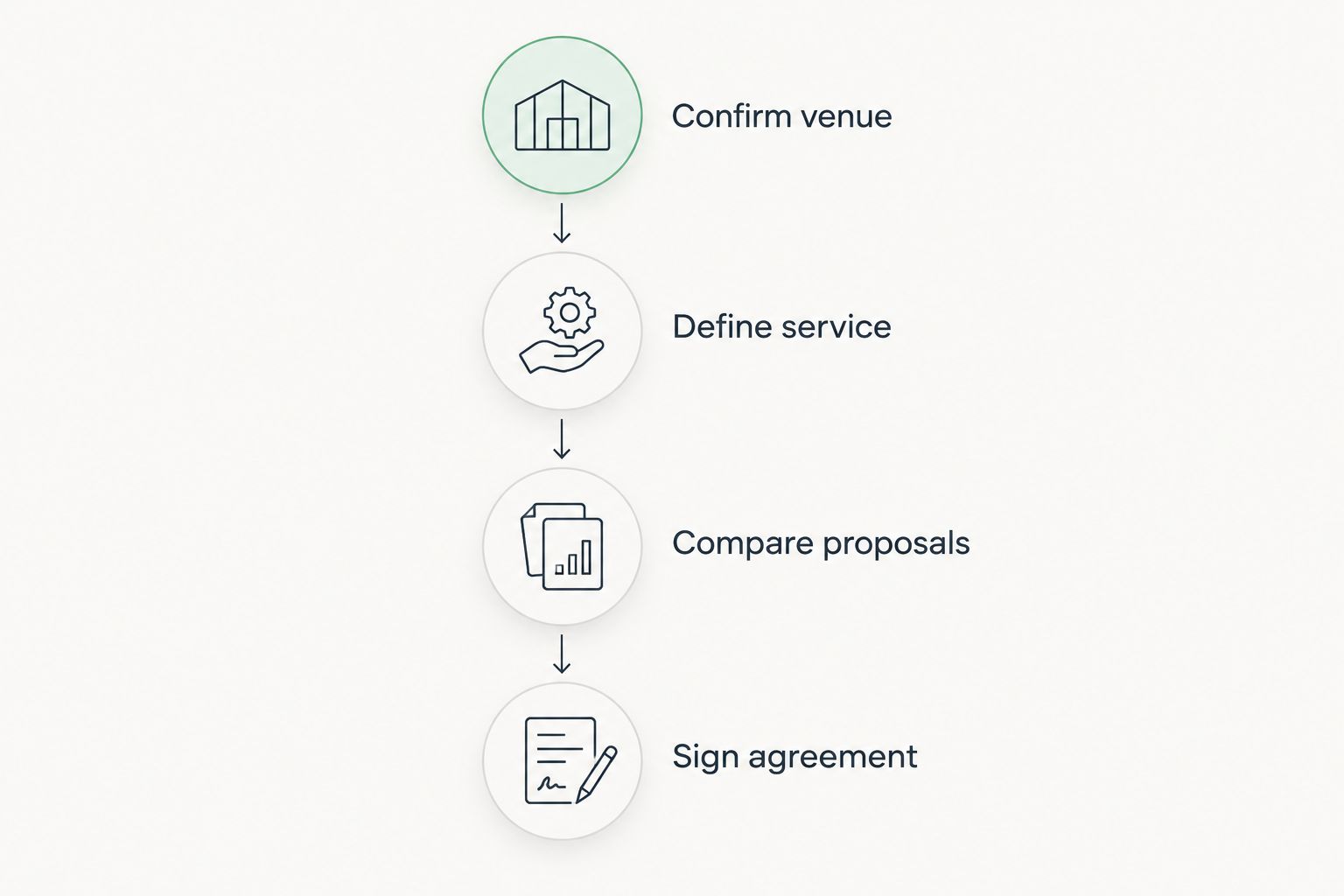
A thoughtful inquiry helps you move from inspiration to a personal menu discussion. For your 2026 celebration, use this sequence.
Confirm venue
Share the date, venue, and event contact. Ask about catering restrictions, preparation facilities, access, and the reception’s indoor alternative before requesting a final proposal.
Define service
Describe the atmosphere you want: a seated celebration, a reception built around conversation, or an intimate family meal. Include dietary requirements and 2 guest-count scenarios if attendance is still being decided.
Compare proposals
Send 1 written brief to each caterer you are considering. Review the proposed menu, service responsibilities, staffing, equipment, timing, and exclusions against that same document.
Sign agreement
Confirm what the agreement secures, which decisions remain open, and how changes are handled. Read the cancellation, payment, guest-count, and rescheduling terms before committing.
Your inquiry does not need a finished menu. It needs enough detail for a caterer to understand your celebration and explain the next decision.
Compare scope, not assumptions about the season
Do not choose a wedding month on the assumption that catering will cost less. Request a personalized quote for the event you actually want.
Guest count, menu choices, meal format, staffing, venue facilities, equipment, and the service schedule all belong in the cost discussion. Ask which items are included, which are separate, and which depend on decisions you have not made.
Use the guide to comparing complete wedding catering quotes when reviewing proposals. A comparison is useful only when you understand the responsibilities behind each total.
For Gabbeys wedding catering, make personalized menus and attentive service part of your inquiry. Explain what your guests need and how you want the reception to feel; request a proposal that connects those priorities to the event details.
Discuss Your Wedding Catering Plans
Share your Dallas–Fort Worth date, venue, guest estimate, and menu preferences for a personalized inquiry.
Which booking window should you choose?
Choose date-and-venue confirmation as your default. Once those details are settled, begin the catering conversation rather than waiting for a supposedly better season.
Choose the caterer-first approach only when that preference should influence your date. For summer outdoor receptions and winter celebrations with several gatherings, resolve the relevant logistics before approving the scope.
The next move is simple: prepare the brief, request a personalized proposal, and make the commitment against written terms.
FAQ
What is the best time of year to book wedding catering in Dallas–Fort Worth?
The best default is to book once your wedding date and venue are confirmed, rather than waiting for a particular season. If a preferred caterer should influence your date, begin that conversation before committing to the venue.
How far in advance should I book wedding catering?
Begin your inquiry when you have a workable date, venue, and guest estimate. Ask the caterer for the deadlines and agreement terms that apply to your event instead of relying on a universal month count.
Should I book a wedding caterer before choosing the venue?
Discuss catering before choosing the venue when your preferred caterer is a priority. Confirm the venue’s catering rules and facilities before signing agreements that depend on those arrangements.
Is winter wedding catering cheaper than spring catering?
A winter date alone does not establish a lower catering total. Compare personalized proposals with equivalent guest counts, menus, service requirements, equipment, and responsibilities.
What should I ask about catering for a summer wedding?
Ask how catering will work in both the intended reception layout and the indoor alternative. Discuss preparation space, food service routes, equipment, and responsibility for any layout changes.
What should I include in my first wedding catering inquiry?
Include your date, venue, estimated guest count, preferred dining format, and dietary requirements. Explain which details are confirmed and which remain open so the caterer can frame the proposal appropriately.
Does Gabbeys suit a personalized Dallas–Fort Worth wedding?
Gabbeys suits couples seeking personalized menus and attentive service for wedding catering. Share your venue, date, guest estimate, and dining preferences to discuss a proposal for your celebration.
One last thing
A date on the calendar is not the same as a defined catering commitment. Before signing, ask the caterer to identify exactly what the agreement confirms and what still needs a decision.
Keep that distinction clear. It protects the care you have put into the celebration and gives your menu planning a sound starting point.