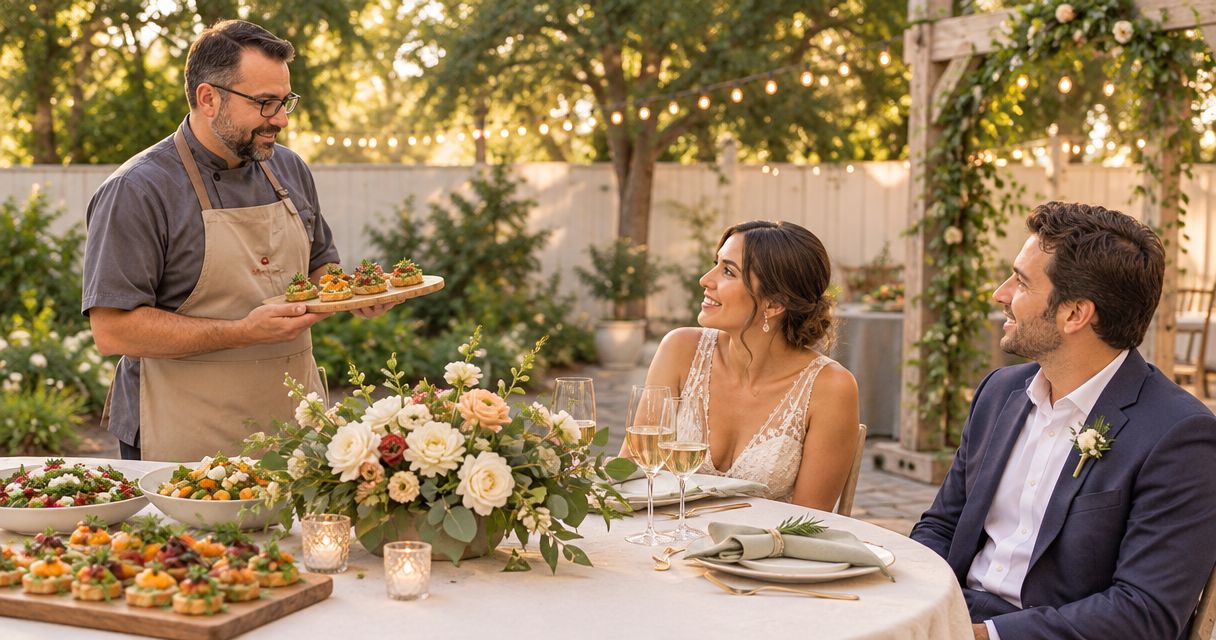
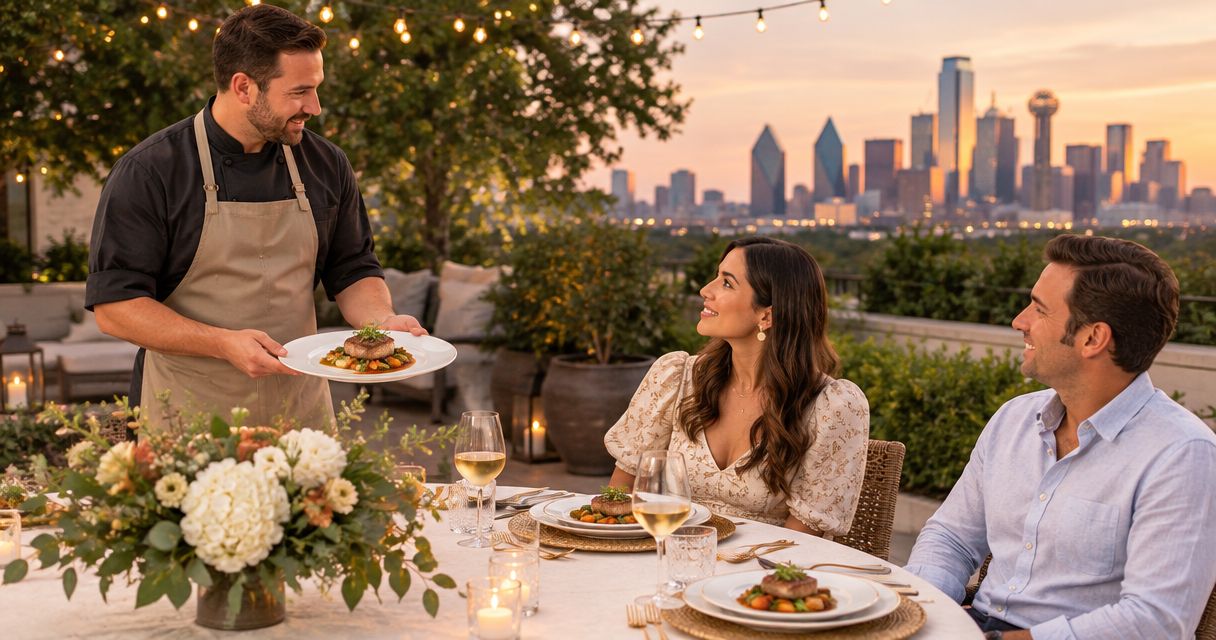
Best overall: Italian. Best for a vegetable-forward table: Mediterranean. Best for a shared celebration: regional Mexican. For a Dallas or Fort Worth dinner party in 2026, choose the cuisine around your guests, your kitchen, and the kind of evening you want—not the most elaborate dish.
- Italian leads the best cuisines for a private chef dinner party in Dallas when you want a familiar, cohesive menu.
- Mediterranean suits vegetable-forward dining; regional Mexican suits a shared celebration.
- French suits a formal occasion; Japanese suits a focused tasting; Indian suits a vegetarian centerpiece.
- Gabbeys suits Dallas–Fort Worth hosts seeking private chef dinner parties with personalized menus and attentive service.
Why this matters
A beautiful dinner needs more than a cuisine name. Your menu must accommodate dietary needs, fit the kitchen, and leave room for conversation. A dish that needs constant last-minute attention creates a different evening from one designed for shared serving.
Gabbeys provides private chef, catering, and meal prep services, with personalized menus and attentive service as reasons to choose the brand. The dishes below are ideas for your inquiry, not confirmed menu offerings. Ask which preparations suit your address, occasion, and preferences.
What makes the best dinner-party cuisine?
Use these criteria to judge your shortlist before choosing a menu:
- Guest fit: Start with allergies, dietary requirements, and foods your guests enjoy.
- Menu cohesion: Choose dishes that belong together rather than collecting unrelated favorites.
- Service rhythm: Decide whether you want shared platters, plated courses, or a guided tasting.
- Kitchen fit: Match the menu to usable cooking space, refrigeration, and finishing equipment.
- Host experience: Choose a format that lets you stay with your guests instead of managing the evening.
- Scope clarity: Confirm preparation, service, cleanup, and any additional staffing in the proposal.
For your 2026 booking inquiry, describe these priorities before naming individual dishes. That gives the chef a useful brief rather than a menu that still needs rebuilding.
Best cuisines at a glance
| Cuisine | Best for | Standout quality | Key limitation |
|---|---|---|---|
| Italian | A welcoming mixed-preference dinner | A cohesive progression from antipasti to a main course | Pasta requires careful finishing and serving |
| Mediterranean | A vegetable-forward table | Vegetables, pulses, herbs, and shared dishes | The regional direction needs defining |
| Regional Mexican | A shared birthday or celebration | Salsas, layered preparations, and communal serving | Heat and dietary needs require dish-level planning |
| French | A formal anniversary dinner | A structured, course-led menu | Complex preparations add kitchen and service demands |
| Japanese | A focused tasting evening | A deliberate sequence of contrasting preparations | Raw dishes require specific safety and handling discussions |
| Indian | A vegetarian centerpiece | Substantial dishes built around pulses, vegetables, and spices | Dairy, nuts, and heat need explicit discussion |
These are use-case recommendations, not a claim that one cuisine is better in every setting. Each cuisine includes regional traditions; narrow the direction with your chef.
1. Italian: best dinner-party cuisine for mixed preferences
Italian is the default when you want an inviting dinner with a clear menu direction. Build around a particular region or a coherent set of preparations, rather than treating pasta, pizza, and every familiar favorite as one menu.
For example, ask about antipasti, a pasta course, and a main with vegetables. Those are discussion points, not a required sequence. You can also make a vegetable-based dish the centerpiece.
Italian pros:
- Supports both shared and plated formats.
- Offers distinct vegetable, seafood, and meat directions.
- Gives you a clear starting point for a cohesive menu.
Italian cons:
- Pasta finishing needs coordination with serving.
- Wheat, dairy, and egg appear in many familiar preparations; substitutions need planning.
Best for: A birthday, a gathering of friends, or a first private chef dinner where guest preferences differ.
For an illustrative dinner of 8 guests, ask whether pasta will be served as a separate course or alongside other food. That decision matters more than adding another dish.
Verdict: Choose Italian as your default; skip a menu built from unrelated favorites.
2. Mediterranean: best dinner-party cuisine for vegetable-forward dining
Mediterranean is a useful starting point when you want vegetables, pulses, herbs, and olive oil to shape the meal. It is a broad regional label, not a single cuisine. Specify a direction such as Greek or Lebanese before discussing individual dishes.
A shared menu can include vegetable preparations, pulses, and a separately served protein if that suits your guests. Ask the chef to make the vegetable dishes substantial rather than treating them as decoration around a main course.
Mediterranean pros:
- Gives vegetables and pulses a central role.
- Suits a shared-table format.
- Allows a focused regional menu without requiring meat in every dish.
Mediterranean cons:
- The broad label can leave expectations unclear.
- Sesame, dairy, wheat, and nuts require attention in relevant dishes.
Best for: Hosts who want a generous vegetable-forward dinner with room for different preferences.
For your 2026 menu discussion, name the regional direction and explain whether you want a fully vegetarian meal or separate protein options. Do not use “Mediterranean” as shorthand for meeting every dietary requirement.
Verdict: Choose Mediterranean for vegetable-forward hospitality; define the region before approving dishes.
3. Regional Mexican: best dinner-party cuisine for shared celebrations
Regional Mexican cooking gives a celebration a clear culinary direction without requiring a formal plated sequence. Choose a region or preparation style, then discuss how guests will share and serve the meal.
Possible starting points include a braised centerpiece, vegetable dishes, tortillas, and contrasting salsas. These are menu ideas to explore, not promised inclusions. Ask which elements should arrive together and which need finishing immediately before service.
Regional Mexican pros:
- Suits communal serving and conversation.
- Offers meat-centered and plant-based menu directions.
- Lets the chef build contrast through sauces, textures, and accompaniments.
Regional Mexican cons:
- Separate salsa does not remove heat already cooked into a dish.
- Broths, sauces, and garnishes need checking for dietary suitability.
Best for: A milestone birthday or an at-home party centered on a shared meal.
If your illustrative party has 12 guests, discuss platter placement and replenishment rather than assuming everyone can comfortably reach one arrangement. Shared service still needs a plan.
Verdict: Choose regional Mexican for a shared celebration; skip assumptions about spice tolerance.
4. French: best dinner-party cuisine for a formal anniversary
French is a strong direction when the sequence of courses is part of the occasion. A focused menu can create a deliberate progression without turning dinner into an endurance event.
Discuss an opening course, a main, and dessert before adding complexity. A composed vegetable starter, a carefully chosen main, and a fruit-based finish are possible directions—not a fixed package.
French pros:
- Suits a defined, plated progression.
- Gives an anniversary dinner a clear sense of occasion.
- Supports a focused menu with distinct courses.
French cons:
- Sauces and last-minute finishing can increase coordination demands.
- Butter, cream, eggs, and wheat need review in relevant preparations.
Best for: An anniversary or intimate celebration where you want a formal dining rhythm.
A 3-course dinner is a useful planning example, not a minimum. Ask how the chef would coordinate plating and table service in your home before requesting additional courses.
Verdict: Choose French for a formal evening; skip complexity that your kitchen and service plan cannot support.
5. Japanese: best dinner-party cuisine for a focused tasting
Japanese is the strongest choice here when you want guests to follow a deliberate tasting sequence. It does not have to mean sushi: discuss cooked dishes, vegetables, rice, and other preparations that fit your preferences.
Ask the chef to explain the proposed sequence and what each course requires at service. Keep the menu focused rather than requesting a survey of unrelated dishes.
Japanese pros:
- Suits a deliberate, course-by-course experience.
- Offers cooked menu directions alongside raw preparations.
- Encourages attention to the relationship between dishes.
Japanese cons:
- Raw seafood requires a specific sourcing and handling discussion.
- Soy, wheat, fish, and shellfish need careful ingredient review.
Best for: A small gathering whose guests want to engage with a tasting menu.
For an illustrative dinner of 6 guests, confirm the serving sequence and whether everyone can follow the same menu. A preference for cooked food should shape the proposal from the start.
Verdict: Choose Japanese for an intentional tasting; skip raw preparations when they do not suit your guests.
6. Indian: best dinner-party cuisine for a vegetarian centerpiece
Indian is a strong direction when you want a vegetarian menu that feels complete without a separate meat centerpiece. Narrow the regional focus and discuss pulses, vegetables, rice, breads, and accompaniments as one coordinated meal.
Explain your guests’ preferences for heat and richness in plain language. “Mild” alone does not explain whether someone dislikes chile heat, avoids certain spices, or needs a medical accommodation.
Indian pros:
- Offers substantial vegetarian menu directions.
- Suits shared serving with complementary dishes.
- Allows contrast through pulses, vegetables, grains, and accompaniments.
Indian cons:
- Vegetarian dishes are not automatically dairy-free or vegan.
- Nuts, dairy, wheat, and individual spice preferences require discussion.
Best for: A vegetarian-led celebration where you want variety across the whole table.
For a 2026 dinner inquiry, identify dietary requirements separately from flavor preferences. Ask about ingredients and preparation rather than assuming a familiar dish name guarantees suitability.
Verdict: Choose Indian for a vegetarian centerpiece; skip assumptions about ingredients or heat.
How the cuisines rank
Italian takes the default position because it provides a clear starting point for a welcoming, cohesive dinner. The remaining recommendations each solve a different hosting brief: vegetable-forward dining, shared celebration, formal service, focused tasting, or vegetarian-led dining.
The ranking uses guest fit, menu cohesion, service rhythm, kitchen fit, host experience, and scope clarity. It does not represent a tasting test or a confirmed Gabbeys menu catalog.
Which cuisine should you choose?
Choose Italian if you are undecided. Change that choice when you have a stronger priority: Mediterranean for vegetables, regional Mexican for shared celebration, French for formality, Japanese for a tasting, or Indian for a vegetarian centerpiece.
Gabbeys is best for Dallas–Fort Worth hosts seeking private chef dinner parties with personalized menus and attentive service. Bring a clear brief and ask for a proposal shaped around your occasion.
Before requesting a 2026 quote, share:
- Your occasion: Private dinner, party, wedding-related celebration, or recurring meal prep.
- Your location: Dallas or Fort Worth address, access details, and relevant property rules.
- Your guests: Headcount, dietary requirements, and important preferences.
- Your format: Shared dishes, plated courses, or a tasting.
- Your kitchen: Available equipment, preparation space, and refrigeration.
- Your scope: Desired service, cleanup, rentals, and staffing arrangements to confirm.
Review kitchen equipment for a private chef dinner party before finalizing labor-intensive dishes. Cuisine alone does not determine the quote; ingredients, guest count, preparation, service, and equipment requirements also shape the scope.
Plan Your Personalized Dinner
Share your Dallas–Fort Worth location, guest count, dietary needs, and preferred cuisine with Gabbeys.
FAQ
What's the best cuisine for a private chef dinner party in Dallas?
Italian is the best default for a welcoming dinner with mixed preferences. Choose a cohesive menu, then confirm dietary needs, kitchen requirements, and service format with your chef.
Is Italian or French better for an anniversary dinner?
Choose French for a formal, course-led anniversary dinner and Italian for a more relaxed shared or plated meal. The right choice depends on your preferred dining rhythm, not the occasion alone.
What cuisine works best for a vegetarian private dinner?
Indian is a strong choice for a vegetarian centerpiece, while Mediterranean suits a vegetable-forward shared table. Confirm dairy, eggs, nuts, sesame, and other relevant ingredients rather than relying on the cuisine name.
Can I request a Japanese dinner without raw fish?
Yes, you can request a cooked Japanese menu in your inquiry. Ask the chef which preparations they can offer and confirm the proposed dishes before booking.
How much does a private chef dinner party cost?
Request a personalized quote based on your guest count, menu, location, and service requirements. Confirm what the proposal includes, especially staffing, equipment, rentals, and cleanup.
Can the same cuisine work for weekly meal prep and a dinner party?
The same cuisine can guide both, but the dishes need different planning. Recurring meal prep needs storage and reheating instructions; a dinner party needs coordinated finishing and service.
Can I use this cuisine shortlist for a small wedding?
Yes, use the shortlist to identify your preferred culinary direction. Then discuss the venue, guest count, dietary needs, and service format separately because a dinner-party plan does not automatically fit a wedding.
One last thing
Ask what happens between the kitchen and the table. A cuisine choice is incomplete until you know who finishes, carries, serves, and clears each course. Before confirming your 2026 dinner, request that sequence in plain language so your role stays where it belongs: with your guests.