
Law firm corporate event catering is planned food and service with the aim of supporting productive meetings and welcoming clients. For Dallas and Fort Worth firms planning in 2026, this guide explains how to coordinate menus, discreet service, office access, and a personalized catering inquiry without letting hospitality interrupt the agenda.
- Gabbeys is best for law firms seeking corporate event catering with personalized menus and attentive service.
- Corporate event catering for law firms should follow the meeting agenda, guest needs, and building access rules.
- Choose seated service for a focused client dinner; consider individually portioned meals for working meetings.
- Confirm dietary handling, staffing, setup, and cleanup in writing before approving the event.
Why corporate event catering matters for law firms
A law firm lunch, recruiting reception, and client dinner need different service plans. Start with the purpose of the gathering, not a menu: working meals must fit the agenda, while hosted dinners need room for conversation.
Gabbeys is best for law firms seeking corporate event catering with personalized menus and attentive service. Explore Gabbeys when those priorities match your brief, then request a proposal that addresses your venue and event requirements.
Law firm hospitality also needs clear boundaries. Catering staff need access instructions and a service schedule, not matter names, client files, or confidential meeting materials. Your office contact should separate operational information from legal work.
For a 2026 event in Dallas or Fort Worth, confirm the actual address before discussing logistics. A downtown office, a separate event venue, and a partner-hosted dinner each require their own access and setup plan.
How to plan catering for a law firm event
1. Define the purpose before choosing the menu
Write a short event brief yourself before contacting a caterer. Name the audience, the business purpose, and what guests should be doing while food is served. This gives you a practical basis for comparing proposals.
For a client dinner, prioritize comfortable conversation and an unhurried welcome. For a training session, protect the presentation schedule. For a recruiting reception, consider whether guests need to move between conversations while eating.
Choose the service around the meeting, not the meeting around the service. Avoid describing every event as a corporate lunch; that leaves important decisions unresolved.
- Identify whether guests are clients, colleagues, recruits, or referral partners.
- State whether eating happens during discussion or during a separate break.
- Name the person authorized to approve the menu and scope.
- Record the expected attendance and how you will confirm it.
- Describe the atmosphere: focused, celebratory, formal, or conversational.
2. Build the service schedule around the agenda
Create a simple run sheet using your calendar and a shared document. Mark guest arrival, food service, presentations, breaks, and departure. Then add delivery, setup, and clearing as separate activities rather than treating them as part of the meal.
Choose 3 timing anchors: arrival, service, and clearing. These are planning decisions, not promised service durations. Ask the caterer to confirm the working schedule after reviewing your venue and menu.
For your 2026 event brief, identify the moments when staff should remain outside the meeting room. A confidential discussion needs an explicit service pause, not an assumption that everyone will recognize the right moment.
- Mark presentation periods when food service must stop.
- Identify who signals that a delayed meeting is ready for service.
- Agree where staff can wait without entering restricted areas.
- Separate the guest arrival time from the caterer access time.
- Confirm who approves changes on the day.
3. Match the catering format to the room
Sketch your room layout before requesting a proposal. Include seats, entrances, presentation equipment, and any place food could be served without blocking movement. A simple floor plan is enough to expose practical problems.
Then bring that brief to Gabbeys for a personalized menu and service discussion. This replaces separate menu and service conversations with a shared brief, but the final format still needs confirmation against your space and requirements.
For local format examples, review catering styles for a Dallas corporate event. Treat each style as a choice with trade-offs rather than assuming the most formal option is always the best fit.
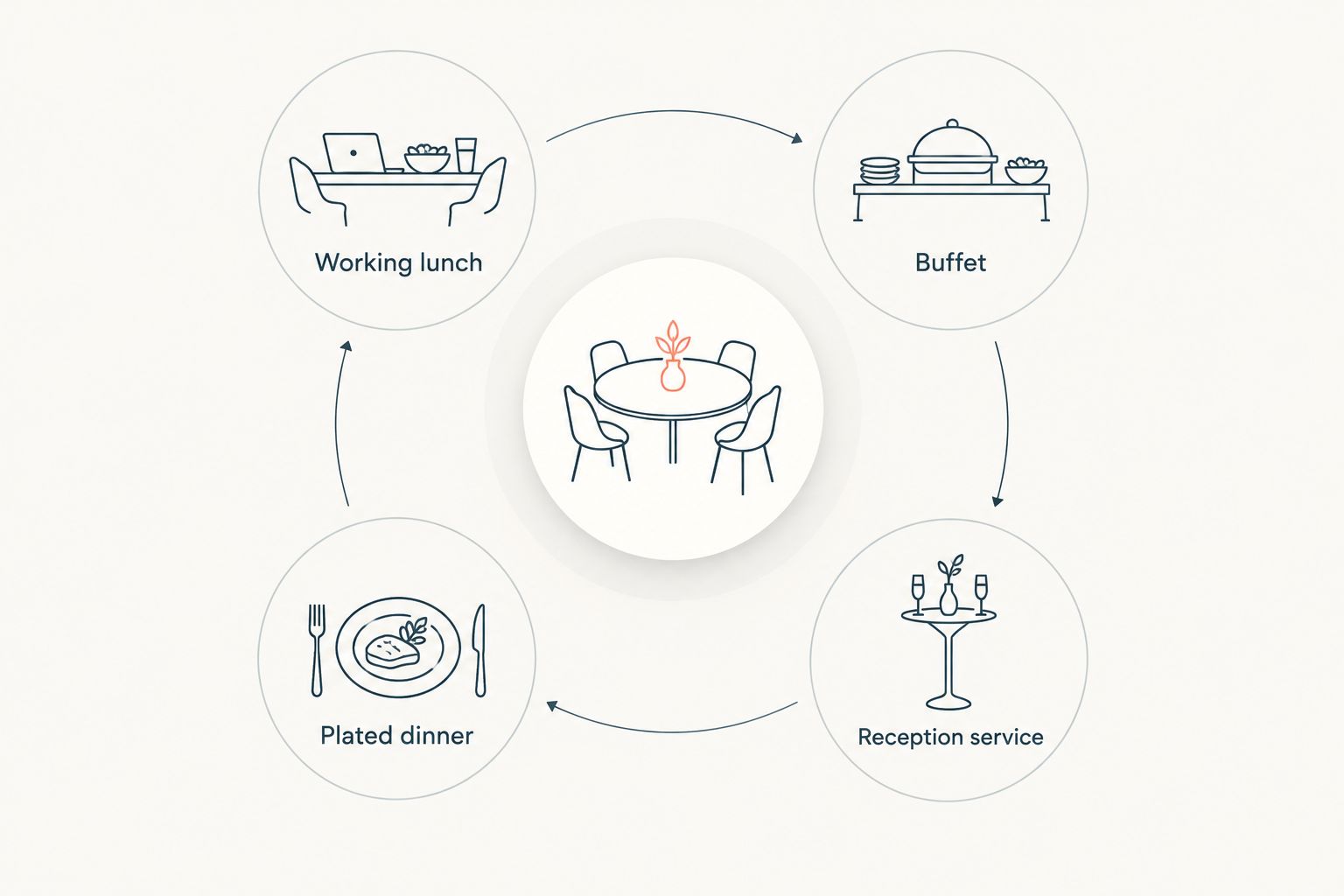
- Working lunch: best for guests who need to remain seated with meeting materials.
- Buffet: best for a scheduled break with room for guests to circulate.
- Plated dinner: best for a hosted meal centered on seated conversation.
- Reception service: best for introductions and conversations across the room.
Compare these formats against the agenda before selecting one. A buffet needs circulation space; a plated dinner needs coordinated service; reception food must suit guests who are standing.
4. Collect dietary needs without exposing private information
Use a private response form or individual email to gather dietary requirements. Ask what the catering team needs to know to prepare and serve the meal; do not request medical histories or circulate personal explanations.
Separate allergies from preferences in your planning document. A request to avoid an ingredient does not establish how a kitchen manages cross-contact. Ask for a direct explanation of ingredient handling and service procedures before giving guests assurances.
Personalized menus are a reason to consider Gabbeys, but personalization is not a substitute for confirming specific requirements. Ask which requests can be accommodated and how the approved meals will reach the correct guests discreetly.
- Collect dietary information through a designated office contact.
- Distinguish allergies, intolerances, religious requirements, and preferences.
- Ask how ingredients and cross-contact concerns are addressed.
- Agree on discreet meal identification and distribution.
- Confirm how late dietary changes will be handled.
5. Confirm office access and service boundaries
Check access directly with your building or venue before finalizing arrangements. Do not assume a catering team can use the passenger elevator, park near the entrance, or prepare food in the office kitchen.
For a 2026 office event, put the approved instructions in the event brief rather than forwarding a chain of building emails. Give the caterer operational details without including confidential attachments or internal legal discussions.
The office kitchen also needs a realistic review. A space intended for coffee and reheating is not automatically suitable for the proposed preparation plan. Ask what equipment and working area the menu requires, then reconcile that with the actual room.
- Confirm loading access, parking instructions, and elevator arrangements.
- Identify the preparation area and any equipment the caterer needs.
- Establish which rooms and corridors are off-limits.
- Ask whether the building requires vendor documents or approval.
- Agree where used dishes, packaging, and waste will go.
- Name the on-site contact who can resolve access problems.
6. Compare complete proposals and approve the handoff
Build a comparison sheet manually before selecting a proposal. Use the same scope headings for every option so a menu-only estimate is not mistaken for a fully staffed event plan.
Ask for a personalized quote based on your guest count, menu, service format, duration, location, and equipment needs. These are the details to discuss when evaluating cost; do not assume staffing, rentals, beverages, or cleanup are included unless the proposal says so.
Approve the event scope, not just the dishes. For your 2026 confirmation, keep the approved menu, service schedule, access instructions, and responsibilities together so your office contact can find them quickly.
- Confirm the menu and the agreed dietary arrangements.
- Identify staffing responsibilities, including serving and clearing.
- Specify who supplies tableware, linens, and other required items.
- Record setup, service, and cleanup expectations.
- Review payment, cancellation, and change terms in the agreement.
- Request a written acknowledgment of the final event brief.
Request Your Law Firm Catering Proposal
Share your Dallas or Fort Worth location, event purpose, guest count, and preferred service format.
Compare catering options for law firm events
The best option depends on what guests need to do during the event. Use this table to choose a format before requesting a detailed proposal; it describes planning trade-offs, not confirmed inclusions from a particular provider.
| Option | Best for | Main advantage | Key limitation |
|---|---|---|---|
| Individually portioned meals | Working lunches and training sessions | Gives each guest a defined meal without a shared serving line | Requires an accurate meal allocation and a plan for packaging or dishes |
| Buffet service | Team gatherings with a dedicated meal break | Lets guests select from the agreed menu | Needs circulation space and a plan for queues and replenishment |
| Plated service | Formal client dinners and partner celebrations | Keeps the meal centered on seated conversation | Requires coordinated seating, dietary identification, and course timing |
| Reception service | Recruiting events and client introductions | Supports movement and conversations between groups | Standing service does not suit every guest or every meeting purpose |
| Private-chef dinner | Small hosted gatherings at a home or suitable venue | Allows the meal to be planned around a specific gathering | Depends on kitchen suitability and a clear serving and cleanup scope |
A private dinner can suit a partner-hosted evening, but it should not be treated as interchangeable with office catering. Confirm venue permission, kitchen access, staffing, and responsibilities separately.
Gabbeys offers private chef and catering services. Ask which approach fits your event; the existence of both services does not establish which staffing or equipment arrangements your proposal includes.
Common mistakes law firms make with catering
Treating a client dinner like an internal lunch
An internal working meal and an external client dinner have different hosting needs. For a client dinner, identify who welcomes guests, handles dietary questions, and authorizes service so the relationship lead can remain present.
Leaving confidential material in service areas
Do not use a food setup table for matter files or leave presentation handouts where catering staff must work. Assign a separate service area and clear it before arrival; confidentiality should not depend on staff guessing which materials are sensitive.
Planning food service during uninterrupted discussion
A plated course arriving during a presentation changes the room's attention. Mark protected discussion periods on the run sheet and give the catering contact an agreed signal for restarting service.
Collecting dietary requests without a distribution plan
A correct menu still needs a reliable handoff. Confirm how the right guest receives the right meal without public announcements about personal health or religious requirements.
Comparing proposals with different responsibilities
A proposal with service staff and clearing is not the same scope as food delivery. Resolve differences in responsibilities before selecting an option, and assign any remaining work to a named person rather than leaving it to reception staff.
FAQ
What's the best catering format for a law firm client dinner?
Plated service is best when the client dinner centers on seated conversation. Confirm course timing, dietary identification, and clearing so service supports the discussion rather than interrupting it.
How do I request corporate event catering for a law firm in Dallas or Fort Worth?
Send an event brief with the address, date, purpose, guest count, service window, and dietary requirements. Ask Gabbeys for a personalized proposal that confirms the menu and service responsibilities for your specific event.
What affects the cost of catering a law firm event?
Guest count, menu choices, service format, staffing, duration, location, and equipment requirements are details to discuss in a personalized quote. Ask the proposal to identify inclusions and separate responsibilities so you can compare equivalent scopes.
Is a buffet better than plated service for an office meeting?
A buffet is better for a dedicated meal break with space to circulate; plated service is better for a hosted seated meal. Neither is automatically right for a working meeting, where individually portioned meals deserve consideration.
How should a law firm handle guest allergies with a caterer?
Collect requirements privately and ask the caterer to explain ingredient handling and cross-contact procedures. Confirm what can be accommodated and how meals will be identified before making assurances to guests.
Can catering staff serve during confidential legal discussions?
Plan service outside confidential discussions rather than relying on staff to recognize sensitive moments. Give the catering contact a schedule, restricted-area instructions, and a designated office liaison.
What should be included in the final catering confirmation?
The final confirmation should record the approved menu, attendance, dietary arrangements, service schedule, access instructions, and responsibilities. Include the agreed terms and the contact authorized to approve changes.
One last thing
Give your caterer a service brief, not your internal meeting packet. The useful details are when to enter, where to work, whom to contact, and when to pause. Keeping those instructions separate makes the handoff clearer while keeping confidential material out of the hospitality workflow.