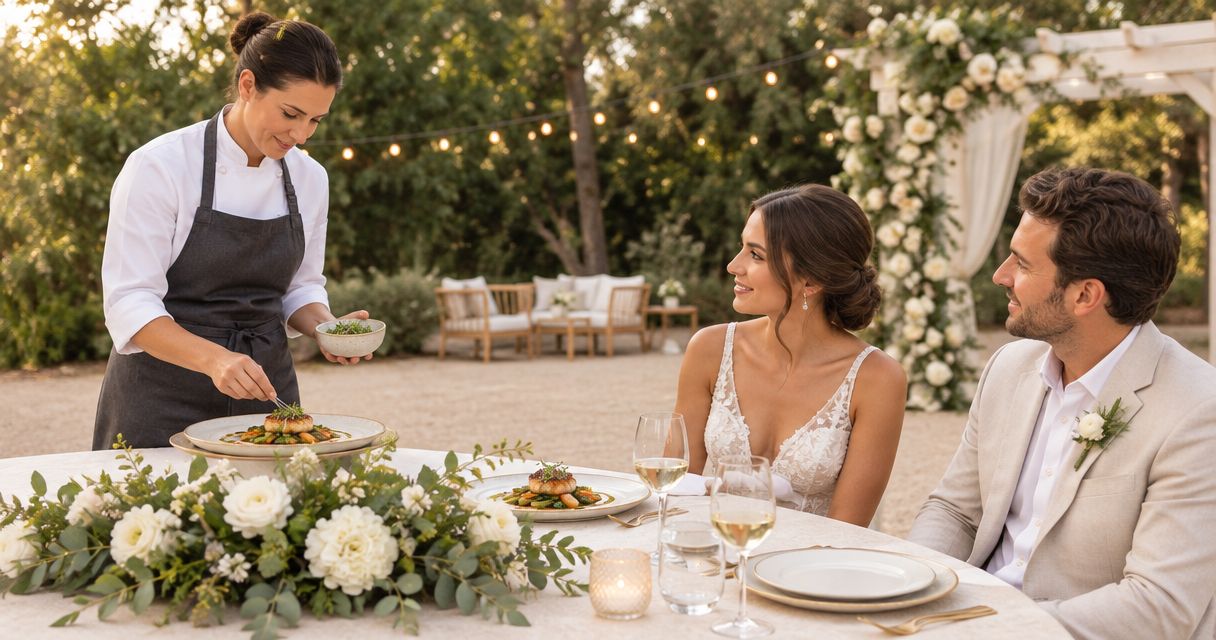

Tech company corporate event catering is coordinated food and hospitality service with the aim of supporting productive meetings, meaningful client conversations, and team celebrations. For Dallas and Fort Worth hosts, the right plan connects personalized menus to the agenda, venue, and attention each guest needs.
- Corporate event catering for tech companies should follow the agenda, not interrupt it.
- Dallas and Fort Worth hosts should confirm venue access, dietary requirements, and service responsibilities before approving menus.
- Choose buffets for flexible selection, plated meals for seated conversation, and receptions for networking.
- Compare complete service scopes and request a personalized quote rather than judging menus alone.
Why corporate event catering matters for tech companies
A product demonstration, leadership dinner, and employee celebration need different hospitality plans. During a presentation, service should stay out of the speaker’s way; at a reception, it should support conversation. Choose the guest experience before choosing the menu.
For your 2026 Dallas or Fort Worth event, start with the actual room and schedule. A venue with limited preparation space needs a different plan from a private dining setting. Compare catering styles for a Dallas corporate event against those constraints before discussing individual dishes.
Personalized menus matter because your guests do not arrive with identical needs. Attentive service matters because someone must manage replenishment, clear used settings, and respond to dietary questions while you host. Put those responsibilities in writing instead of assuming that catering includes them.
How to plan corporate event catering for tech companies
1. Define the business purpose and guest experience
Write a short event brief yourself before approaching a caterer. A shared document is enough. Describe what the gathering needs to accomplish and how food should support that purpose.
An internal planning session needs a different atmosphere from a prospective-client dinner. For a launch reception, decide whether guests should circulate or gather around a presentation. For a leadership retreat, protect time for uninterrupted conversation.
Build 1 planning brief that everyone involved can reference. Keep the decision-maker, office coordinator, and venue contact working from the same version so menu discussions do not drift away from the event’s purpose.
- Name the occasion: team meeting, client dinner, launch, or celebration.
- Identify the host and the person authorized to approve changes.
- Describe the desired atmosphere, from focused to celebratory.
- Record the expected attendance and invitation status.
- State whether food supports a seated meal or ongoing conversation.
2. Build the food schedule around the agenda
Mark service windows on your meeting agenda before requesting a proposal. Include setup and clearing, not just the moment guests begin eating. This gives your caterer a practical schedule to evaluate.
For a 2026 conference or product event, check whether the room must stay quiet during demonstrations. Ask where staff can move without crossing sightlines or interrupting recordings. If a session runs late, identify who can authorize a change to meal service.
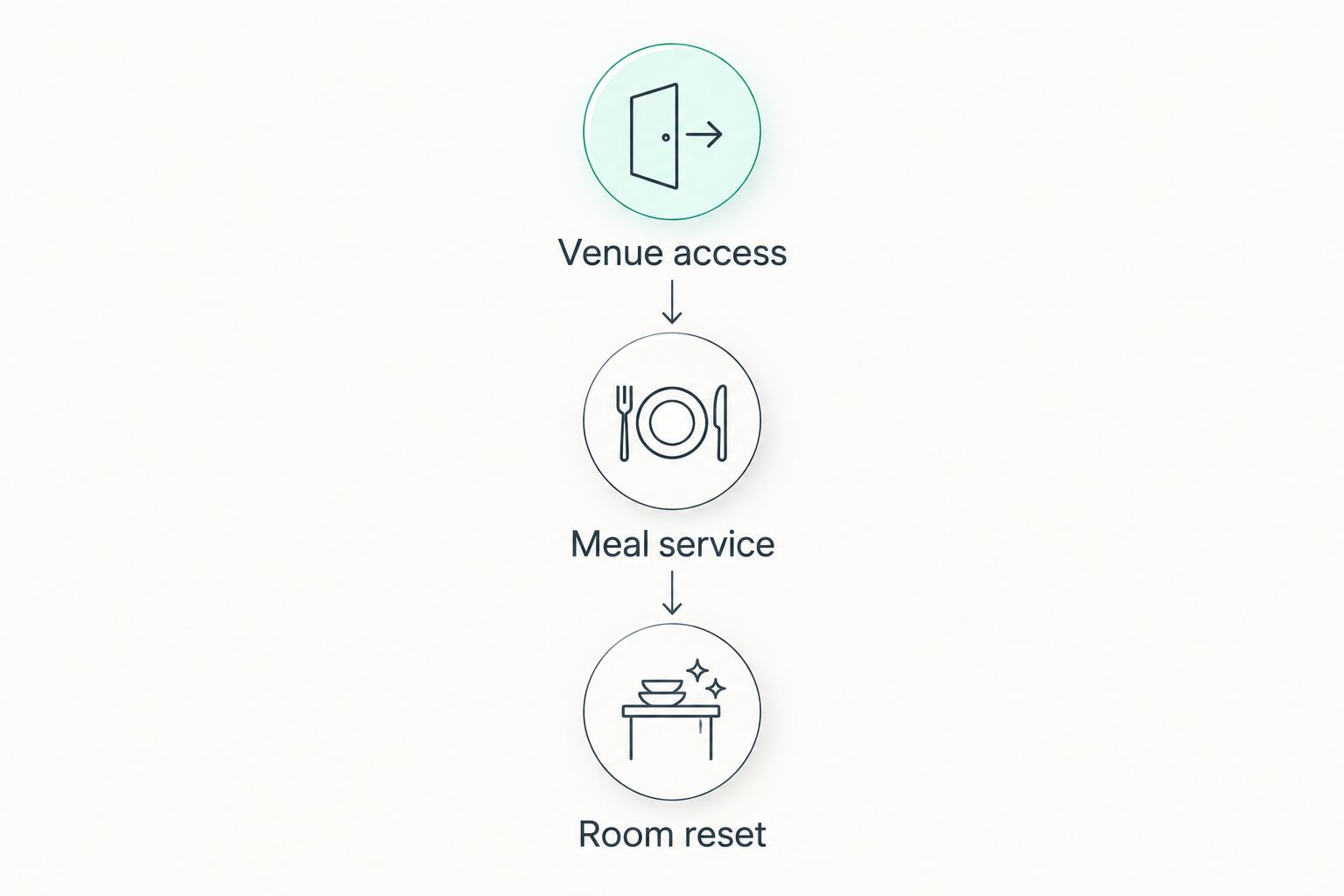
Use 3 planning checkpoints: venue access, meal service, and room reset. Each needs a named owner and an agreed place in the schedule.
- Venue access: confirm when the catering team can enter and unload.
- Meal service: identify when guests can leave sessions or take their seats.
- Room reset: reserve space in the agenda for clearing and rearrangement.
- Flag presentations during which service movement should stop.
- Give the caterer a single event-day decision-maker.
3. Match the service format to the occasion
Sketch a basic room layout and compare how guests would receive food. Trace the route from a meeting seat to the serving area. If that route crosses a demonstration space or creates a bottleneck at an entrance, reconsider the arrangement.
You can prepare this comparison yourself, then discuss it with a catering provider rather than coordinating every element separately. Gabbeys corporate event catering is best for hosts seeking personalized menus and attentive service. Start a conversation with Gabbeys about your Dallas or Fort Worth gathering and request a proposal matched to your brief.
Personalization gives you room to shape the occasion, but it also requires clear decisions about preferences, staffing, and venue responsibilities. Confirm the proposed format and scope before treating any element as included.
- Choose seated service when sustained table conversation is the priority.
- Consider a buffet when guests need visible menu choices.
- Consider stations when the room supports circulation between serving points.
- Choose a reception format when introductions and mingling lead the agenda.
- Ask who handles replenishment, clearing, and guest questions.
4. Collect dietary needs before discussing dishes
Use a registration question or a private response form to gather dietary requirements. Ask guests to distinguish allergies from preferences, then share the relevant information with the caterer through an agreed channel.
Do not treat a menu label as a complete allergy-management plan. Discuss ingredients, preparation, service utensils, and how guests will identify the food intended for them. Ask the provider to explain any limitations before you make assurances to attendees.
Personalized menus should make guests feel considered without requiring them to negotiate their meal during a client conversation. Keep sensitive details out of widely circulated planning documents, and share them only with the people coordinating food service.
- Collect allergies, dietary restrictions, and relevant preferences separately.
- Ask how the proposed menu accommodates each stated requirement.
- Confirm how dishes and individual meals will be identified.
- Discuss cross-contact concerns directly with the caterer.
- Set a clear process for dietary updates after registration.
5. Check the venue before approving the menu
Walk through the venue with its coordinator or request a practical facilities summary. A kitchen’s presence does not establish which equipment a visiting catering team can use. Confirm permission, access, and responsibilities.
For Dallas and Fort Worth offices, include building management in the conversation where access rules apply. Ask about loading arrangements, elevators, security procedures, and waste removal. These details belong in your 2026 event plan before the menu becomes final.
Keep food service away from presentation equipment and preserve routes through the room. If the event includes demonstrations, show the caterer where equipment and cables will sit rather than relying on a general room description.
- List available preparation, refrigeration, and serving facilities.
- Confirm access rules with the venue or building contact.
- Mark serving areas and guest circulation routes on the layout.
- Identify the location for used dishes and waste collection.
- Agree who supplies any required equipment or tableware.
6. Compare complete proposals, not menu descriptions
Create a simple comparison sheet using the same event brief for every proposal. Match guest count, service format, timing, and responsibilities before deciding which proposal fits. An appealing menu does not tell you who will manage the room.
Ask Gabbeys for a personalized quote that addresses your event’s scope. Cost depends on decisions such as menu complexity, attendance, staffing, service format, equipment, and venue logistics. Request clarification on each relevant item rather than assuming that similar menu descriptions mean equivalent service.
Separate confirmed responsibilities from optional additions and unresolved questions. Your approval should establish what will happen, who will do it, and how changes will be handled.
- Request an itemized scope covering food and service responsibilities.
- Confirm whether setup, clearing, equipment, and tableware are included.
- Identify the assumptions behind the proposed staffing arrangement.
- Review payment, cancellation, and change terms in the agreement.
- Ask how travel, venue requirements, and applicable charges are addressed.
7. Confirm the final plan and guest communication
Bring the approved menu, schedule, and room layout into one final document. Keep 2 headcounts clearly labelled during planning: invited guests and confirmed attendees. Use the caterer’s agreed process to establish the final catering count.
For a 2026 team gathering, send guests practical information without overloading the invitation. Explain where to go, when food will be served, and how to report a dietary change. Keep the more detailed service instructions with the event team.
Before the event, walk through the plan with the provider and venue contact. Afterward, record operational feedback that will help you plan the next gathering without making unsupported assumptions about guest preferences.
- Confirm the final attendance process and deadline in the agreement.
- Share the approved schedule, menu, and room layout.
- Reconfirm dietary arrangements through the agreed channel.
- Name the person who approves event-day changes.
- Record feedback on timing, food identification, and guest flow.
Compare catering formats for your tech company event
The best format is the one that fits your agenda and room. Each option below has a useful role and a limitation to resolve. Treat these as planning choices, not a statement that a particular provider includes every format.
| Option | Best for | Main advantage | Key limitation |
|---|---|---|---|
| Buffet | Team meals with varied preferences | Guests can see the available choices before selecting | Serving lines need space and a suitable break in the agenda |
| Plated meal | Client dinners and seated leadership gatherings | Guests remain seated while the meal is served | Seating, dietary assignments, and timing need closer coordination |
| Food stations | Receptions with room for circulation | Separate serving points can support movement through the event | Each station needs space and an agreed service arrangement |
| Passed reception food | Networking and launch celebrations | Food can reach guests while conversations continue | Guests need clear ingredient information; suitability depends on the menu and event length |
| Individually portioned meals | Working sessions and staggered attendance | Meals can be assigned to individual attendees | Dietary assignments, holding arrangements, and waste need planning |
For a small executive dinner, personalized service can support a more intimate atmosphere. For a larger employee gathering, prioritize the serving layout and clear guest instructions. Neither format is automatically better; decide which trade-off your event can accommodate.
Common catering mistakes tech companies make
Letting the demonstration schedule absorb the meal break
A late-running presentation can leave the food plan disconnected from the agenda. Give the host and caterer an agreed way to respond, and identify which parts of the schedule can change. Do not leave that decision to serving staff.
Choosing a reception menu for a seated working session
Food designed for mingling does not automatically suit guests using laptops or reviewing documents. Tell the caterer how attendees will spend the meal period. Select the format around that behavior rather than around appearance alone.
Assuming an office kitchen is event-ready
An office kitchenette is not a confirmed catering workspace. Share the facilities and access details before approving a proposal. Ask the provider what the proposed service requires and resolve any gaps with the venue.
Treating recurring meals as repeated event bookings
Recurring team meals need their own planning brief, including attendance updates and a repeatable dietary process. Keep executive in-home meal prep separate from the corporate event scope. The location, recipient, and service expectations differ even when the same person coordinates both.
Turn your plan into a qualified inquiry
For your 2026 inquiry, give Gabbeys the event date, Dallas or Fort Worth location, expected guest count, occasion, preferred service format, and known dietary requirements. Include the agenda and venue constraints so the discussion starts with the experience you want to create.
Ask for a personalized proposal and confirmation of the requested arrangements. A clear brief helps you evaluate the fit without assuming menu inclusions, staffing, or date commitments.
Plan your corporate gathering
Share your location, guest count, agenda, and dietary needs to request a personalized proposal.
FAQ
What's the best corporate event catering for tech companies?
The best corporate event catering for tech companies matches the agenda, guest needs, and venue. Choose seated service for table conversation, a reception for networking, or a buffet when visible menu choices suit the gathering.
How do I arrange corporate catering in Dallas or Fort Worth?
Start with an event brief covering the date, location, guest count, agenda, dietary needs, and preferred format. Ask Gabbeys to discuss a personalized menu and service proposal, then confirm the requested arrangements in writing.
Is a buffet better than a plated meal for a tech event?
A buffet suits flexible selection, while a plated meal suits seated conversation. Compare available floor space, the meal window, and the level of coordination your event requires before choosing.
What affects the cost of corporate event catering?
Menu complexity, guest count, staffing, service format, equipment, and venue logistics affect the scope of a catering quote. Request a personalized proposal and compare the same responsibilities across providers.
How should I handle food allergies at a company event?
Collect allergy information before menu approval and discuss it directly with the caterer. Confirm ingredient communication, preparation limitations, cross-contact concerns, and how guests will identify their meals before making assurances.
Can I plan a client dinner differently from an employee lunch?
Yes, a client dinner and an employee lunch should have separate event briefs. A client dinner can prioritize sustained conversation and attentive table service, while an employee lunch needs a format suited to its schedule and attendance.
What should I send with a corporate catering inquiry?
Send the event date, address, expected attendance, occasion, agenda, dietary requirements, and preferred service format. Add venue access details and identify who can approve the proposal and subsequent changes.
One last thing
Approve the clearing plan as carefully as the menu. Used settings, unattended serving areas, and uncertain room-reset responsibilities can interrupt the next part of your gathering. Put that final handoff in the same document as the first course.